





The Receipt Economy: Why Proof of Delivery Is the New Currency of Trust
There was a time when proof of delivery was little more than a signed piece of paper tucked away in a filing cabinet. It existed for record-keeping, compliance, and the occasional dispute. Today, that same document has taken on a much larger role. In a world where customers expect real-time visibility and instant answers, electronic proof of delivery has become a cornerstone of trust.
Whether it is a retail shipment, a grocery order, a healthcare delivery, or a B2B distribution run, customers want certainty. They want to know where their order is, when it arrived, who received it, and whether it was delivered in good condition. Businesses that can provide those answers quickly earn trust. Those that cannot often find themselves dealing with disputes, support tickets, and frustrated customers.
Welcome to the receipt economy, where trust is built on evidence rather than assumptions.
Why Trust Has Become a Business Metric
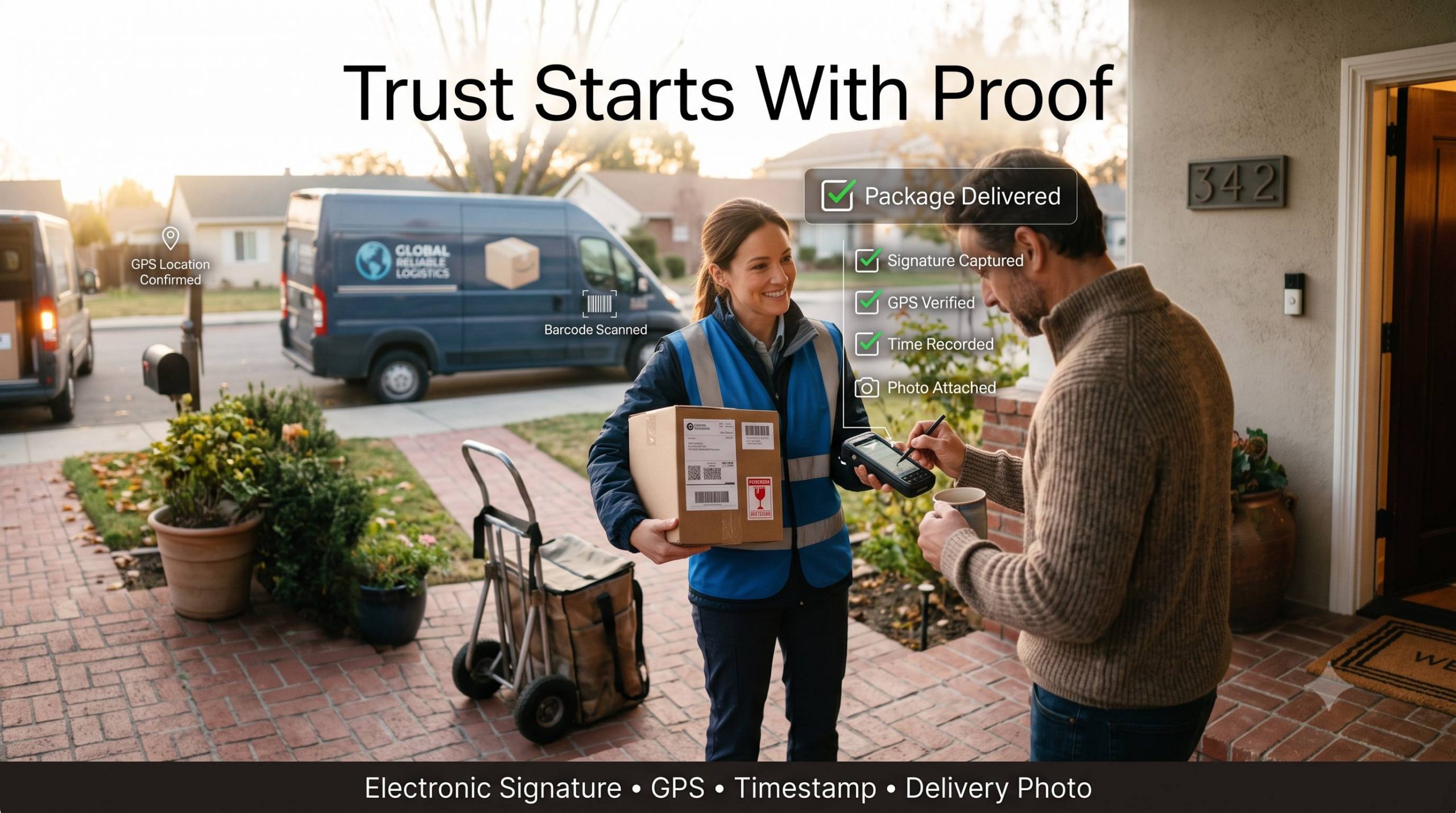
Trust has always mattered in logistics, but it has never been more visible than it is today.
Customers are accustomed to digital experiences that provide complete transparency. Banking apps show transaction histories in seconds. Ride-sharing platforms record every trip. Food delivery services provide photos, timestamps, and live tracking updates. The expectation is simple: if something happened, there should be proof.
Delivery operations are now being held to the same standard.
According to PwC, nearly three-quarters of consumers consider customer experience an important factor when making purchasing decisions. For many businesses, delivery is the final touchpoint in that experience. A late shipment can be forgiven. A delivery that cannot be verified is much harder to explain.
This shift has elevated digital proof of delivery from an operational requirement to a customer experience necessity.
The Hidden Cost of Uncertainty
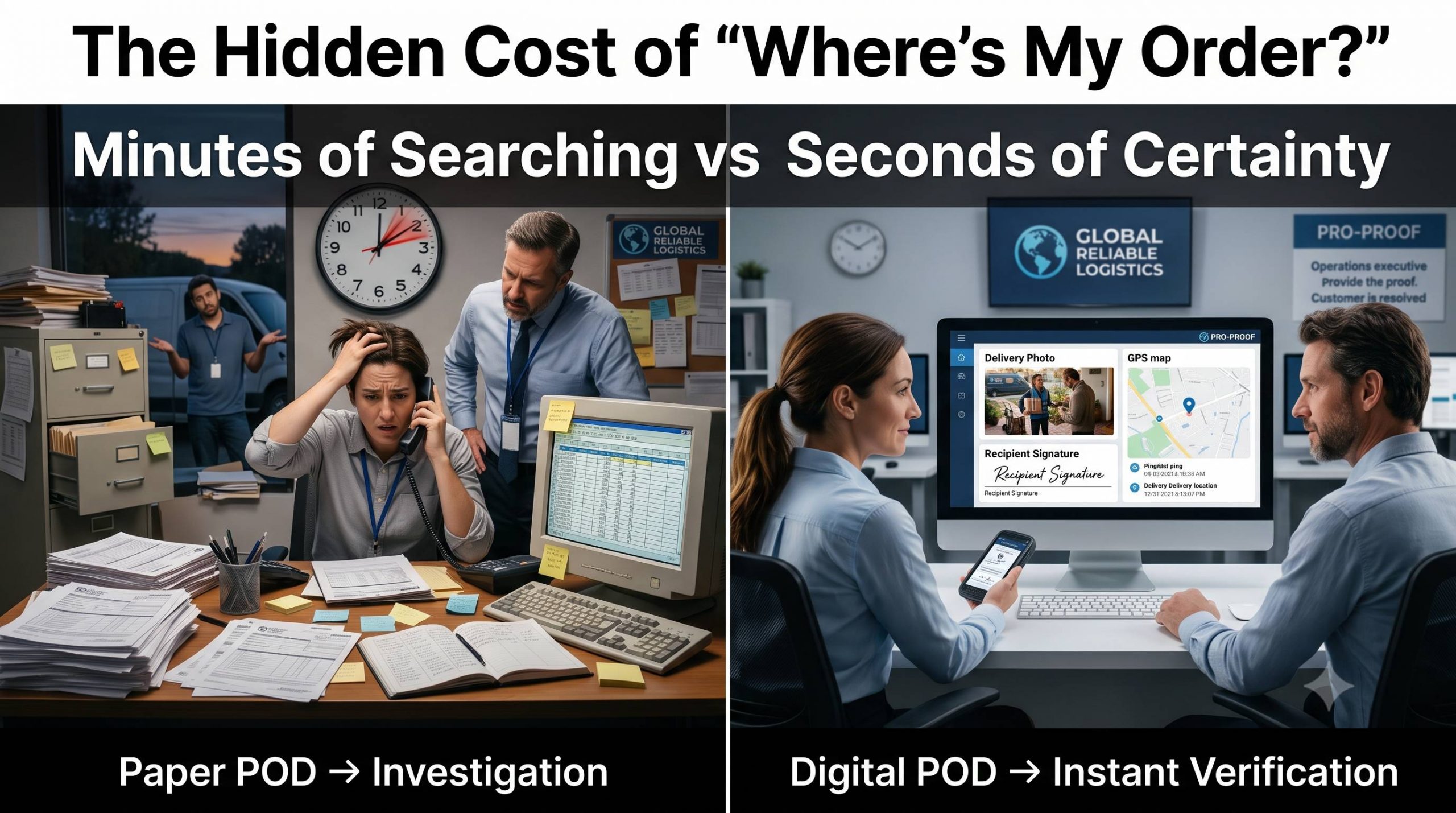
Every logistics manager has encountered a version of the same phone call. A customer claims a shipment never arrived.
The operations team begins an investigation. Drivers are contacted. Delivery records are reviewed. Emails are exchanged. Valuable time is spent trying to determine what actually happened.
The issue is not always the delivery itself. More often, it is the lack of immediate verification.
With modern electronic proof of delivery software, the story changes completely. Delivery records can include timestamps, GPS coordinates, recipient signatures, photographs, barcode scans, and driver notes. Instead of launching an investigation, teams can access the facts within seconds.
The difference may seem small, but its impact is significant.
Faster dispute resolution reduces administrative costs, improves customer satisfaction, and helps businesses avoid revenue leakage. More importantly, it eliminates the uncertainty that often sits at the center of delivery-related conflicts.
That is where the true value of proof of delivery software lies. It does not simply document deliveries. It creates confidence in every completed transaction.
The Rise of the Receipt Economy
Consumers live in a world built on digital receipts.
Every online purchase generates a confirmation email. Every streaming service records viewing history. And every payment platform creates a transaction trail. People have become accustomed to having proof available whenever they need it.
Logistics is following the same path.
Every delivery creates a digital footprint. Every interaction generates valuable information. Plus every completed stop contributes to a larger record of accountability.
Businesses that embrace electronic proof of delivery are not just collecting delivery confirmations. They are creating a reliable source of operational truth.
This matters because trust becomes increasingly difficult to maintain as operations grow. A company making fifty deliveries a day may be able to manage exceptions manually. A company making fifty thousand deliveries a day cannot.
At scale, trust depends on systems, processes, and data. The receipt economy is ultimately about creating transparency that grows alongside the business.
Why Paper PODs Are Losing Their Place
Despite advances in logistics technology, many organizations still rely on paper-based delivery records.
The challenges are familiar.
Documents get misplaced. Handwriting becomes difficult to interpret. Retrieval takes time. Processing delays create bottlenecks. Audits become more complicated than they need to be.
At the same time, customer expectations continue to move in the opposite direction. They expect information immediately, not days later.
This disconnect is one of the biggest reasons companies are investing in ePOD Software and modern proof of delivery solutions. Digital records are available in real time, accessible from anywhere, and far easier to manage than stacks of paperwork.
The shift is not simply about efficiency. It is about creating a delivery experience that matches the expectations of modern customers.
Beyond Signatures: What Proof Looks Like Today
A signature was once considered sufficient proof that a delivery occurred. That definition has changed.
Modern proof of delivery solutions provide a much richer picture of what happened at the point of delivery. A single record can include an electronic signature, a delivery photograph, GPS verification, timestamp data, barcode scans, and notes from the driver.
Together, these elements create a level of visibility that paper documentation cannot match.
Consider the difference between hearing someone describe an event and watching a recording of it. Both communicate information, but one provides a far greater degree of certainty.
The same principle applies to logistics.
The more complete the delivery record, the easier it becomes to resolve disputes, improve accountability, and strengthen customer trust.
Why ePOD Data Matters in the Age of AI
Artificial intelligence is transforming logistics at a rapid pace. Route optimization, predictive ETAs, automated dispatching, and intelligent planning are becoming standard capabilities across the industry.
However, even the most advanced AI systems depend on accurate operational data.
This is where electronic proof of delivery software creates value that extends beyond delivery verification.
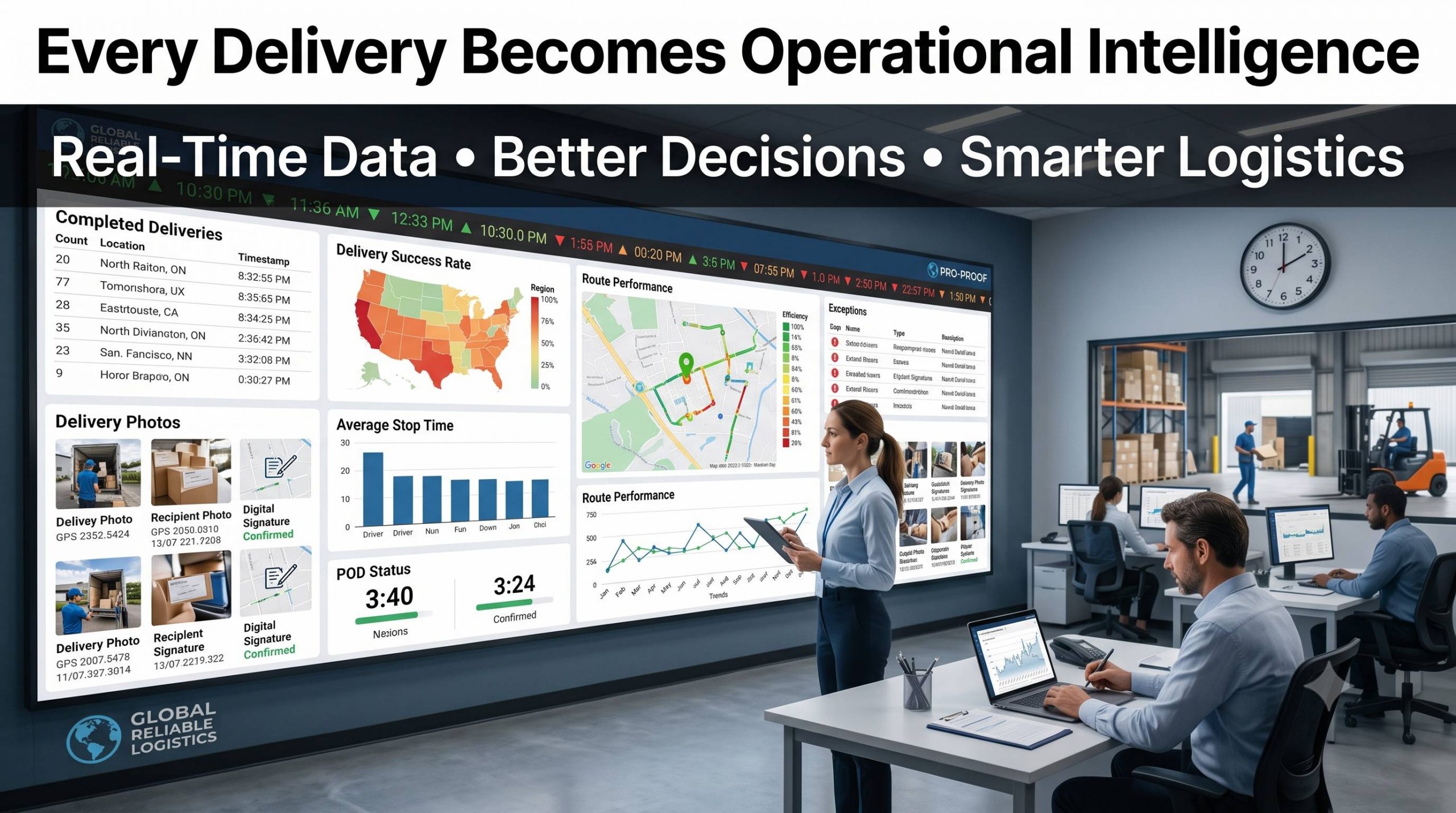
Every completed delivery generates information about actual arrival times, service durations, customer interactions, delays, and exceptions. Over time, these records create a valuable dataset that helps businesses identify inefficiencies and improve decision-making.
A route optimization engine can only improve performance if it understands what happens in the real world. Delivery proof provides that reality check.
The organizations investing in digital proof of delivery today are also building the foundation for smarter logistics operations tomorrow.
Conclusion
The logistics industry is moving toward a future defined by transparency, accountability, and data-driven decision-making. As customer expectations continue to rise, proof of delivery is no longer just a confirmation that a shipment arrived. It has become a critical tool for building trust, reducing disputes, and improving operational visibility.
With LogiNext’s ePOD Software, businesses can capture real-time delivery verification, gain deeper operational insights, and transform every completed delivery into a trusted transaction. If your organization is looking to strengthen customer confidence while improving delivery performance, LogiNext can help you make every delivery count.
23

|

|

|




@LogiNext