




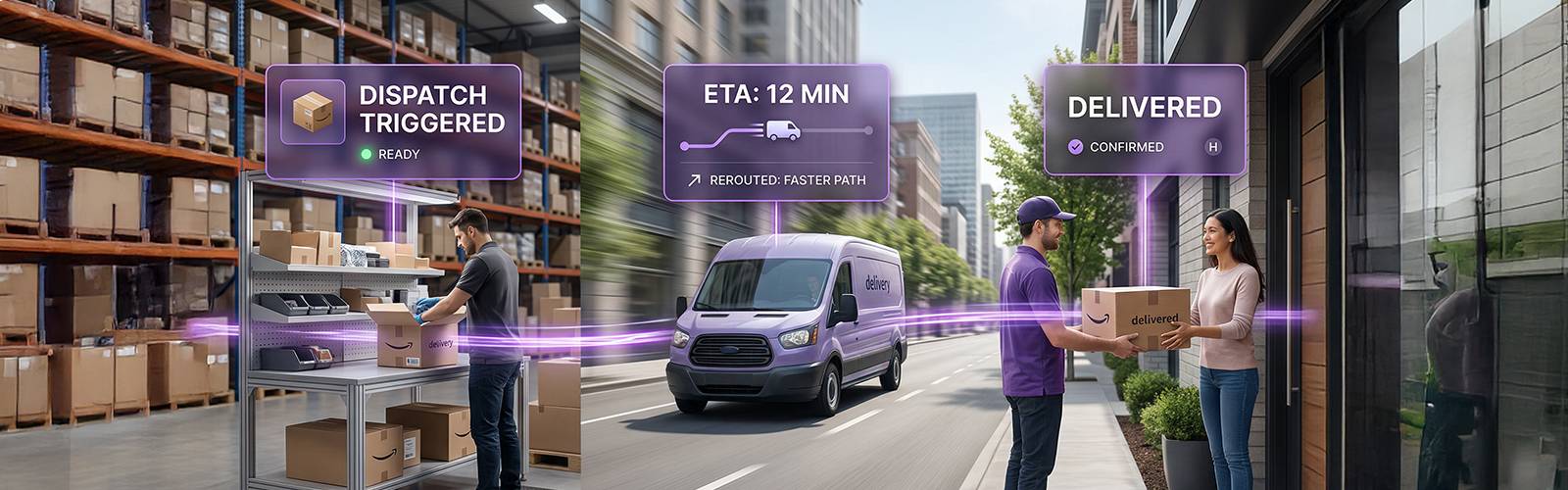
Delivering Retail at the Speed of Demand: How LogiNext Powers Same-Day Fulfillment
In today’s fast-moving commerce landscape, retail delivery software has become essential for brands looking to meet rising customer expectations. Same-day delivery is no longer a premium service, and retailers need solutions like LogiNext to move orders from warehouse shelves to customer doorsteps within hours.
This shift is pushing businesses to rethink traditional fulfillment models. To keep pace, they need a smarter retail delivery system that seamlessly connects warehouse operations with last-mile execution.
Key Takeaways
- Same-day delivery requires retailers to connect fulfillment, dispatch, routing, and last-mile execution.
- Retail delivery software can automate order assignment, route optimization, and delivery orchestration.
- AI and real-time data help retailers respond to traffic, demand spikes, and delivery exceptions.
- Centralized delivery operations improve visibility across warehouses, stores, carriers, and delivery fleets.
- Real-time tracking and accurate ETAs can improve customer experience while reducing support-related delivery queries.
Why Are Retail Delivery Expectations Rising?
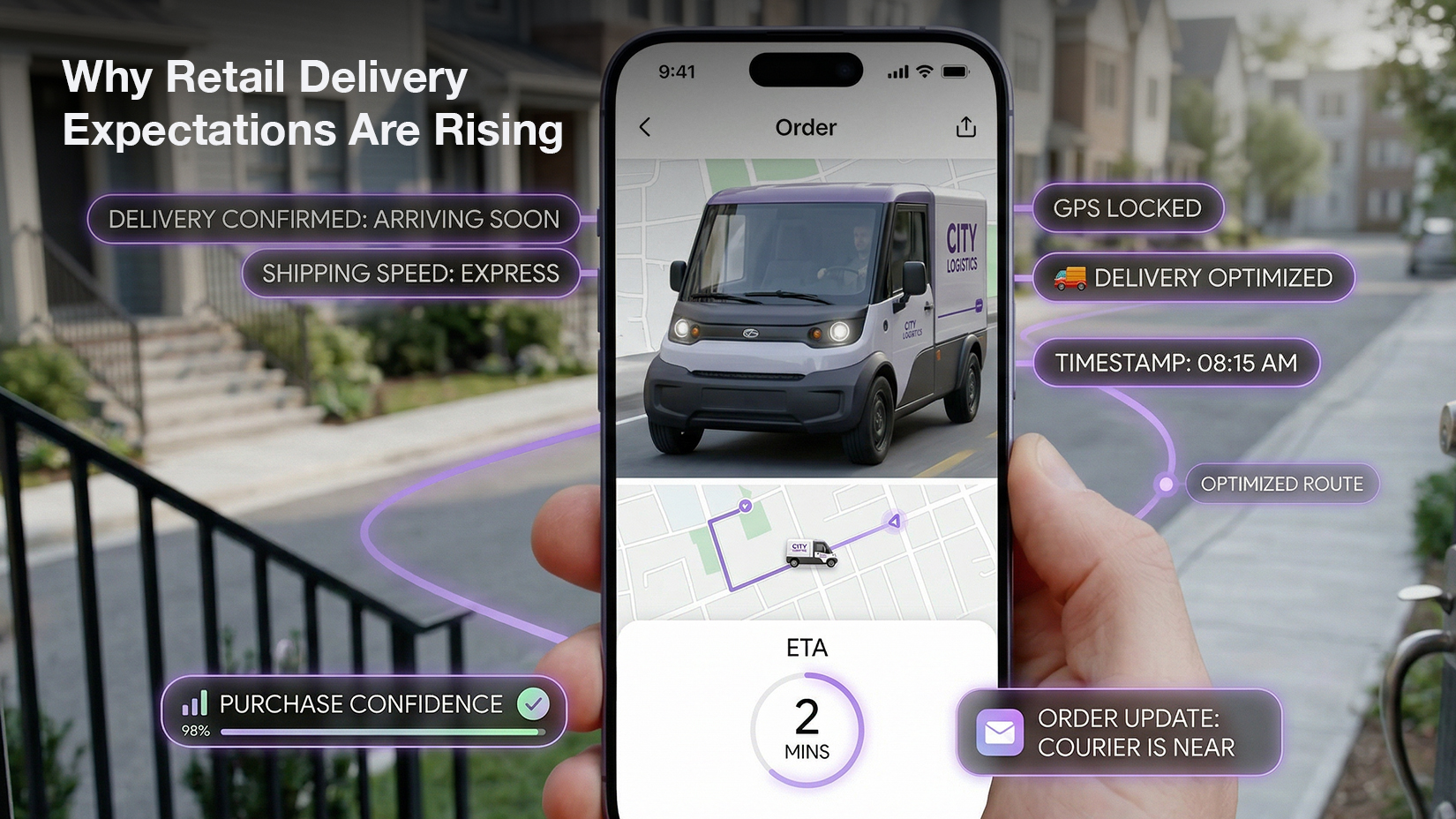
Customer expectations around speed have changed dramatically over the last few years. Fast delivery now directly influences purchase decisions, repeat orders, and brand loyalty.
Recent market studies show that nearly 80% of shoppers are more likely to complete a purchase when faster delivery options are available. As a result, retailers are under growing pressure to modernize operations with robust retail delivery management software that can support same-day fulfillment at scale.
This is where LogiNext creates a clear advantage. By combining intelligent dispatch, route optimization, and real-time visibility, it helps retailers simplify workflows. Plus it also accelerates delivery timelines without increasing complexity.
Why Has Delivery Speed Become Critical to Retail Success?
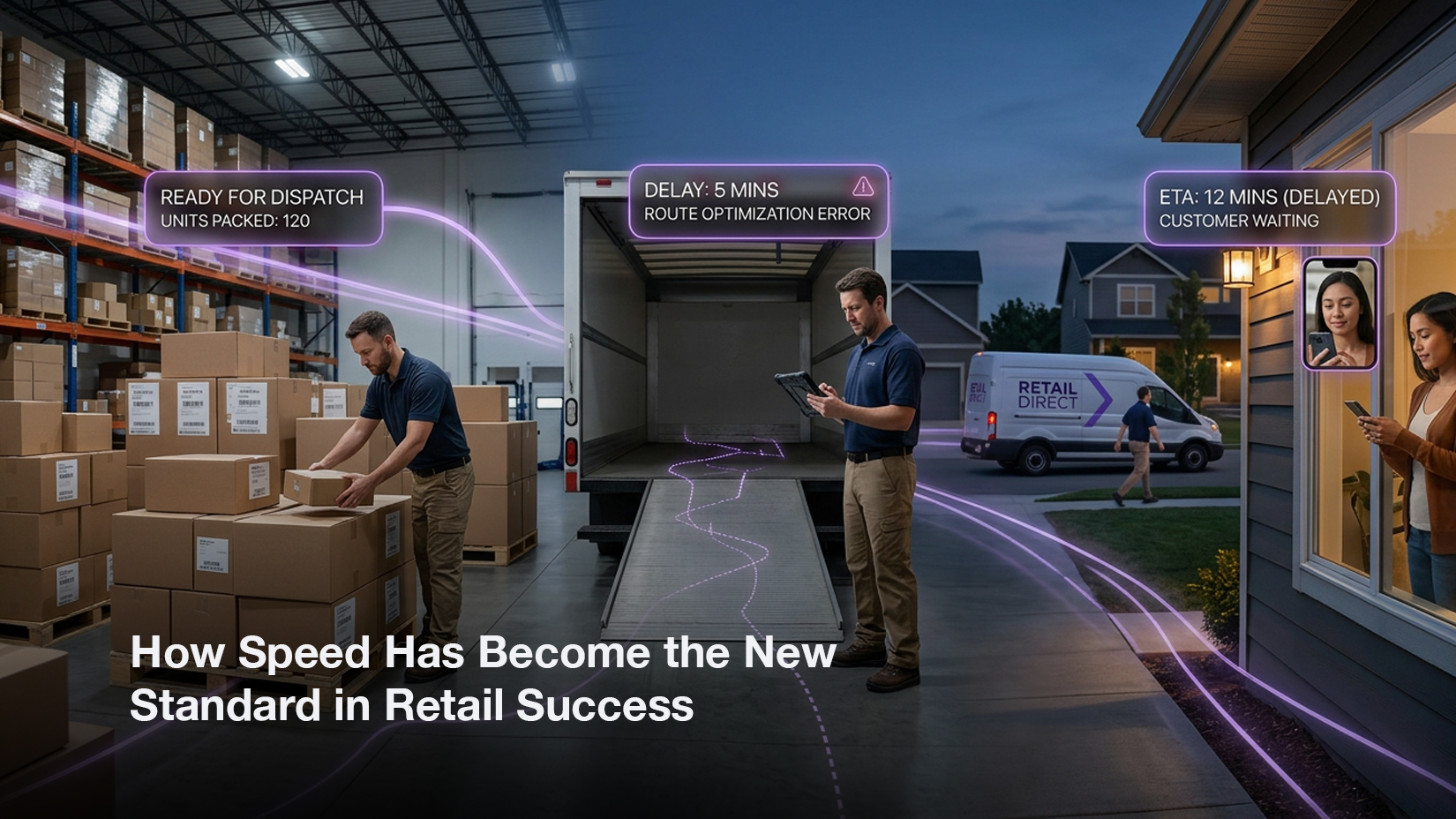
Modern retail is no longer defined only by product assortment or pricing. Delivery speed now directly influences purchase decisions and customer retention. Consumers expect flexible delivery windows, accurate ETAs, and live tracking updates, making fulfillment experience an extension of the brand itself.
At the same time, the operational complexity behind fast delivery has increased. Retailers must coordinate warehouse picking, packaging, dispatch, route planning, and proof of delivery within narrow time windows. Without a modern retail delivery management system, these processes often remain disconnected, creating delays and driving up costs.
This gap between warehouse readiness and delivery execution is where many businesses struggle. Orders may be packed and ready, but inefficient dispatching or poor route planning can still lead to missed delivery promises.
How Can Retailers Connect Warehouse Operations to the Last Mile?
LogiNext addresses this challenge by creating a unified retail logistics software ecosystem. One that connects fulfillment centers, stores, drivers, and customers on a single platform.
The moment an order is placed, the system automatically processes it and assigns the most efficient delivery path. This is based on location, drier availability, traffic conditions, and promised delivery windows. This eliminates the need for manual route planning and significantly reduces dispatch delays.
For retailers handling high order volumes, this automation is critical. A strong retail delivery management software solution ensures that orders are intelligently batched, routes are dynamically optimized, and deliveries are assigned in real time. The result is faster movement from warehouse to doorstep without increasing operational complexity.
This is particularly valuable during peak sales periods, festive seasons, and flash promotions when demand surges can overwhelm legacy systems.
How Does AI Improve Retail Delivery Optimization?
Fast delivery must also remain cost-efficient. This is where AI powered retail delivery software plays an important role.
LogiNext uses AI-driven route optimization and predictive analytics to continuously improve delivery efficiency. Instead of relying on fixed routes, the platform dynamically adapts to traffic conditions, delivery priorities, driver capacity, and real-time disruptions.
For example, if traffic congestion affects a route, deliveries can be recalculated instantly to maintain promised ETAs. If order density spikes in a specific zone, deliveries can be automatically clustered to reduce travel time and improve fleet utilization.
This use of AI powered retail management helps retailers strike the right balance between speed, service quality, and cost control. Rather than reacting to delivery issues after they occur, teams can proactively manage exceptions and improve SLA adherence.
How Can Retail Delivery Software Improve Operations at Scale?
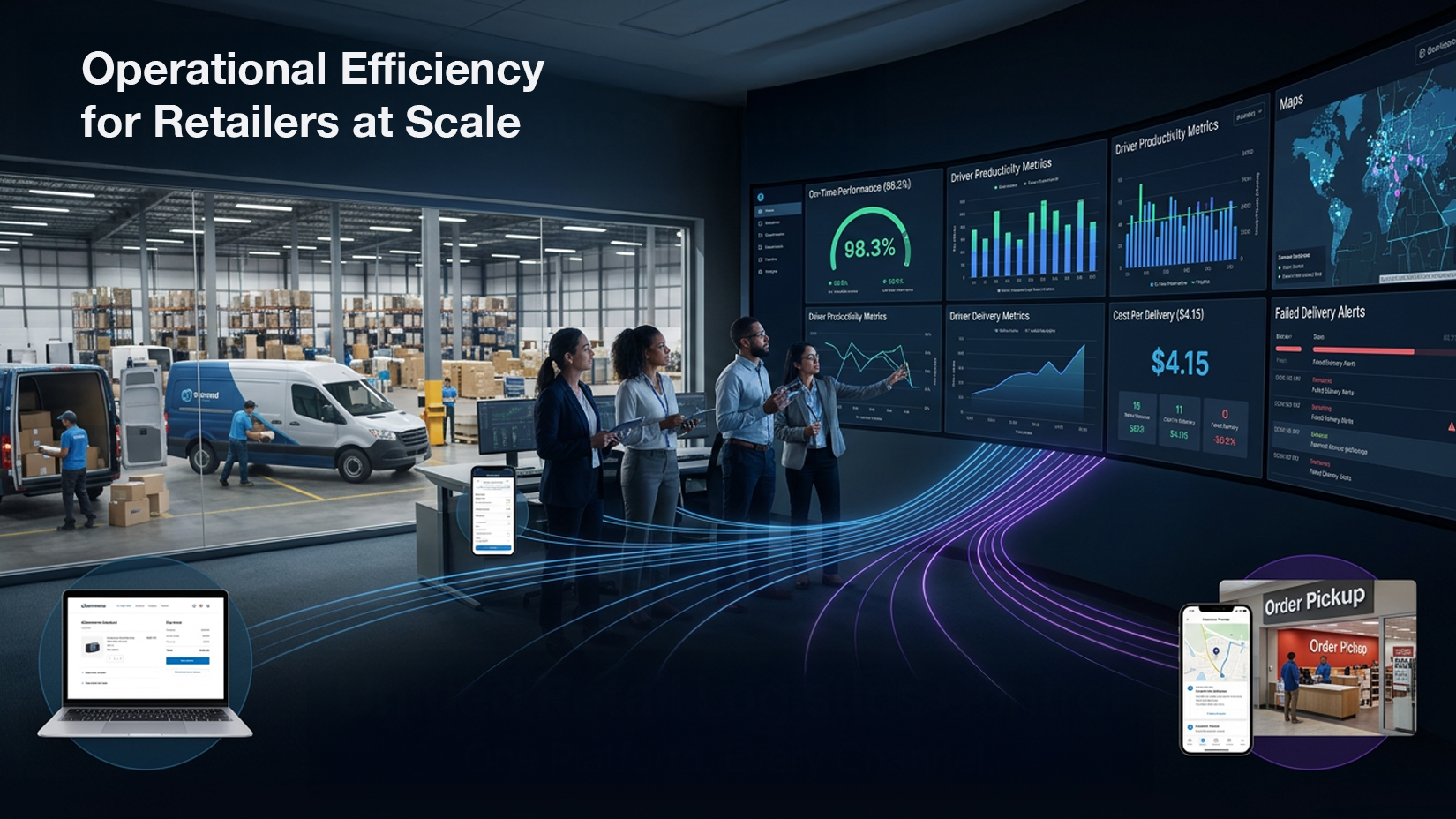
As retail businesses grow, complexity grows faster than order volume. Multiple warehouses, store-based fulfillment, dark stores, third-party carriers, and in-house fleets all need coordination. This is where scalable retail logistics software becomes a business enabler.
LogiNext allows retailers to centralize delivery operations across regions and channels. Whether the order originates from:
- eCommerce website
- Mobile app
- Physical store
- Market place
- Quick commerce channel
The same retail delivery software can manage orchestration seamlessly. This unified control reduces fragmentation and improves SLA adherence across networks. Retail leaders gain access to dashboards that track:
- Delivery success rates
- Driver productivity
- Cost per delivery
- On-time performance
- Failed delivery trends
These insights help optimize both strategic and day-to-day operations.
How Does Real-Time Delivery Visibility Improve Customer Experience?
Customers today expect transparency at every stage of the delivery journey.
A delayed order becomes far less frustrating when the customer has real-time visibility into where it is and when it will arrive. LogiNext’s retail delivery system enables live tracking, automated status updates, accurate ETAs, and proof of delivery notifications.
This not only improves customer confidence but also reduces the burden on support teams. Fewer “Where is my order?” queries mean lower service costs and better operational efficiency.
More importantly, visibility builds trust. In a competitive retail environment, trust often translates directly into repeat purchases and stronger brand loyalty
Frequently Asked Questions
1. What is retail delivery software?
Retail delivery software helps businesses manage and optimize the movement of orders from fulfillment locations to customers. It can include order assignment, route optimization, dispatch, tracking, ETA management, and proof of delivery.
2. How does retail delivery software support same-day delivery?
It connects order fulfillment with delivery execution by automating tasks such as driver assignment, route planning, dispatch, and real-time tracking. This helps retailers move orders through the delivery process faster while maintaining visibility.
3. How does AI improve retail delivery management?
AI can analyze order volumes, delivery locations, traffic, driver availability, and other operational data to optimize routes, allocate deliveries, predict ETAs, and respond to changing conditions.
Conclusion: Faster Retail Delivery Starts with Smarter Execution
As retail continues to evolve, fulfillment is becoming a key differentiator. Businesses that can deliver quickly, accurately, and with full visibility are better positioned to meet customer expectations and protect margins.
LogiNext helps retailers transform delivery from a back-end logistics function into a strategic growth driver. By connecting warehouse workflows, intelligent routing, and real-time customer visibility into one platform, it enables businesses to deliver faster and operate smarter.
The future of retail belongs to brands that can fulfill demand in hours, not days. With the right technology in place, same-day delivery becomes not just possible, but sustainable at scale.
“”
 |  |  |




@LogiNext