




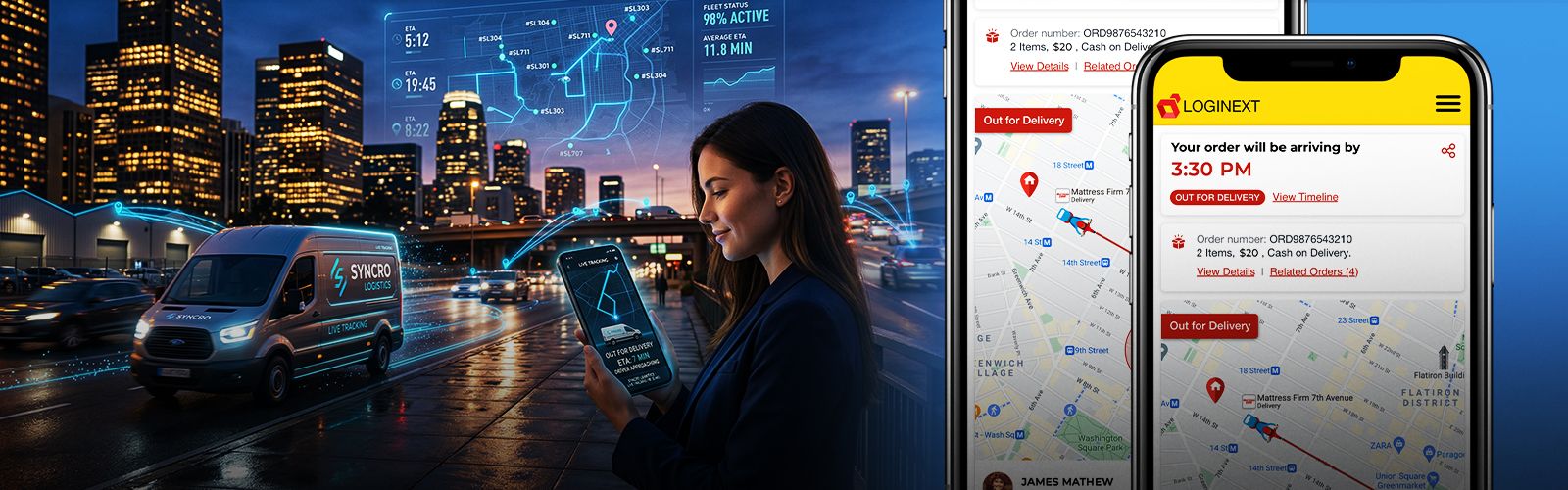
Real-Time Tracking Is the New Currency of Customer Trust
Real-time tracking has become the defining standard of modern logistics. Customers no longer view visibility as a bonus. They expect to monitor their orders from dispatch to delivery without friction or delay.
There was a time when customers placed an order and waited patiently. That time is gone. Today’s digital economy runs on transparency. If buyers cannot see where their order is, confidence drops immediately.
In a market shaped by instant commerce and same-day fulfillment, real-time tracking is not a feature. It is a requirement.
The Rise of Visibility in the Digital Economy
E-commerce has trained consumers to expect transparency. According to Salesforce, 88% of customers say the experience a company provides is as important as its products or services. Delivery visibility is a core part of that experience.
Meanwhile, research from Gartner shows that supply chain visibility is a top investment priority for logistics leaders. The reason is simple. Visibility reduces uncertainty. Uncertainty damages trust.
Real-time order tracking bridges this gap. It keeps customers informed at every stage. Order confirmed. Dispatched. Out for delivery. Delivered.
When customers receive timely real-time updates, they feel in control. When they feel in control, satisfaction rises.
Why Real-Time Tracking Is Now Non-Negotiable
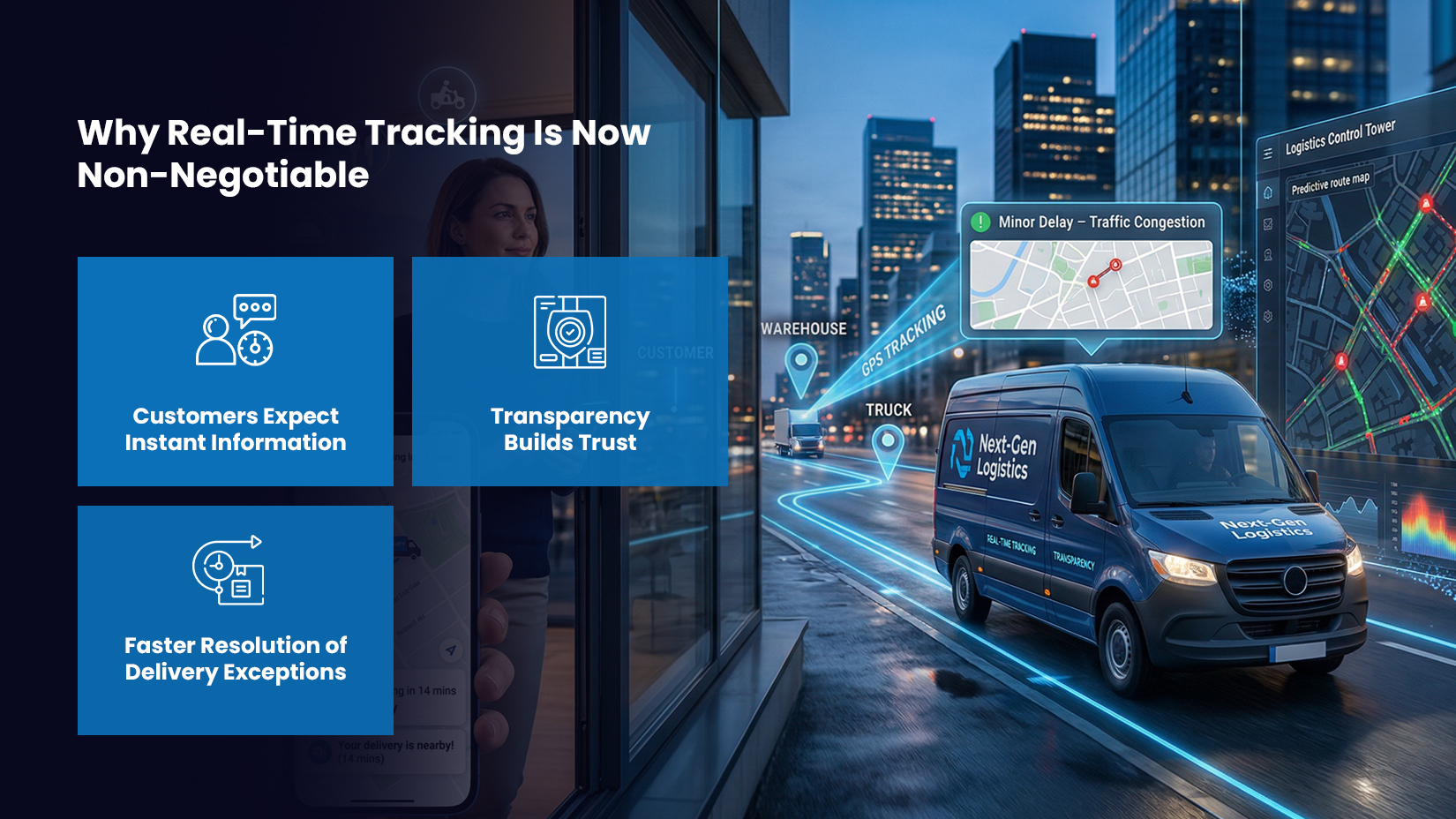
1. Customers Expect Instant Information:
Modern buyers live in an on-demand world. They track rides, food and parcels. The expectation has crossed industries. Companies like Amazon and Uber normalized real-time delivery tracking. Live maps and driver ETAs are now standard.
This behavior shift changed logistics permanently. Customers no longer ask, “When will it arrive?” They expect to see it. Without this, customer support tickets increase. “Where is my order?” becomes the most frequent query. That drives operational cost.
2. Transparency Builds Trust:
Trust is fragile in logistics. A delayed order without communication feels worse than a delayed order with updates. Real-time notifications reduce anxiety. They provide clarity when delays happen. A simple alert explaining traffic congestion can prevent frustration.
According to a 2023 consumer survey by PwC, 73% of customers say transparency influences brand loyalty. Transparency in delivery begins with real-time order tracking. If customers feel informed, they are more forgiving. If they feel ignored, they churn.
3. Faster Resolution of Delivery Exceptions:
Delays are inevitable. Traffic, weather, incorrect addresses, or failed delivery attempts happen daily. This is where AI powered real-time tracking changes the equation. Modern delivery management software uses predictive analytics to detect disruptions before they escalate.
For example, AI powered real-time tracking can:
- Predict late arrivals based on route conditions
- Trigger automated real-time updates to customers
- Reassign drivers dynamically
- Optimize alternate routes
Instead of reacting after a complaint, operations teams respond proactively. That is the difference between service recovery and service excellence.
Operational Impact: Beyond Customer Satisfaction
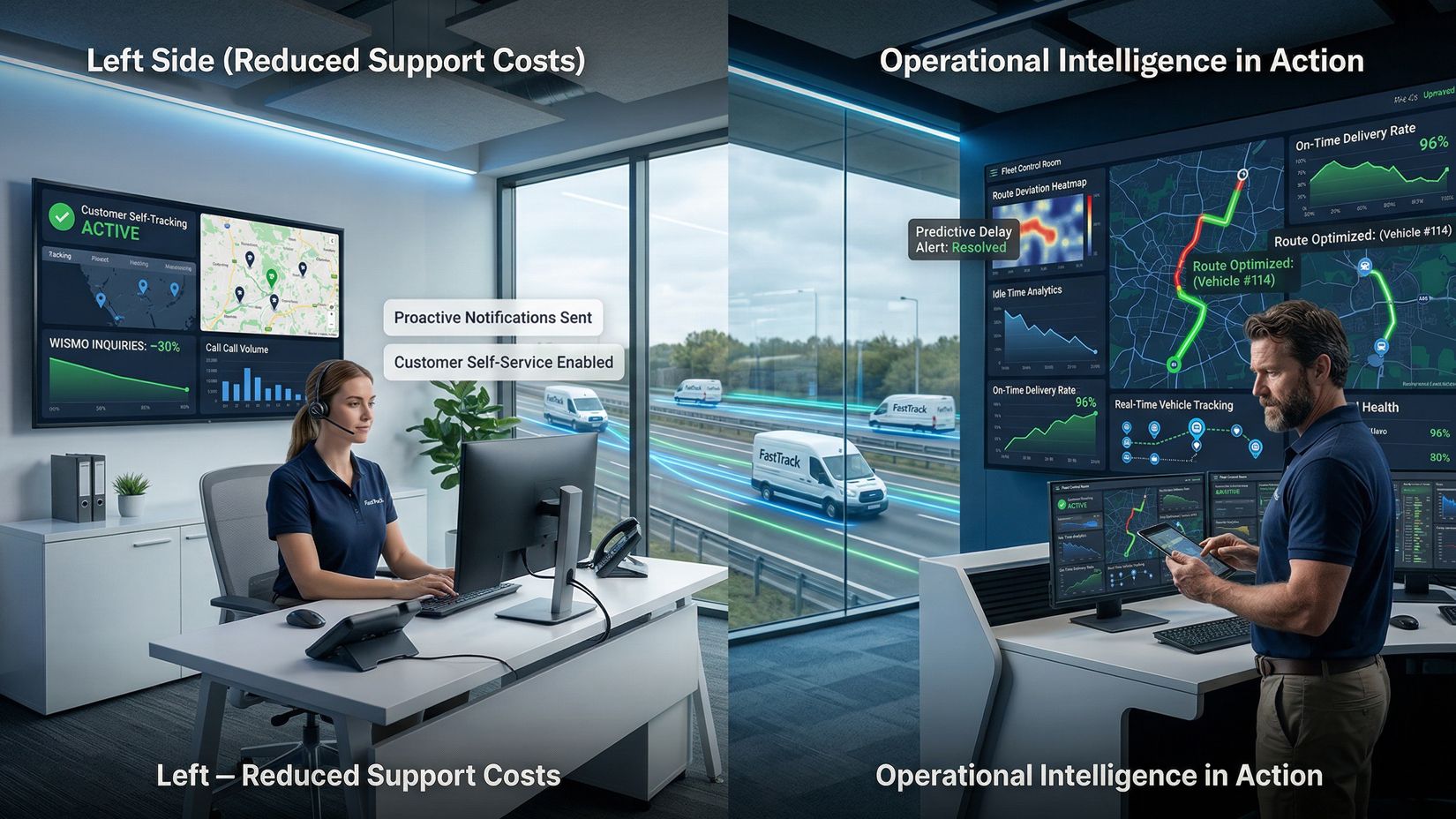
Real-time tracking is not just customer-facing. It improves internal efficiency.
1. Reduced Support Costs:
Without visibility, support teams spend hours answering order status calls. With real-time delivery tracking, customers self-serve. Industry reports suggest that proactive real-time notifications can reduce “Where is my order?” inquiries by up to 30%. That translates to measurable cost savings.
2. Improved On-Time Performance:
Data collected through this provides performance insights. Fleet managers can analyze route deviations, idle time, and delivery delays. Delivery software powered by analytics transforms tracking data into action. Over time, this improves on-time delivery rates and driver productivity. Visibility is not passive. It is operational intelligence.
The Technology Behind Modern Real-Time Tracking
Let us be clear. Basic tracking links are outdated. Modern real-time order tracking integrates multiple technologies:
- GPS-enabled driver apps
- Cloud-based delivery management software
- AI driven route optimization
- Automated real-time updates via SMS, email, and app notifications
- Dynamic ETA calculations
Advanced systems now use AI powered real-time tracking to predict arrival windows with high accuracy. This is not guesswork. It is data-driven precision.
According to McKinsey & Company, AI-driven logistics solutions can reduce transportation costs by 5–15% and improve service levels by up to 65%. Real-time visibility plays a central role in that improvement.
Competitive Advantage in a Crowded Market
Logistics is no longer a back-end function. It is a brand differentiator. Consider the growth of quick-commerce platforms like Blinkit and Zepto. Their value proposition depends heavily on real-time delivery tracking and constant real-time notifications.
Customers watch their orders move on a live map. The experience feels interactive. Engaging. Reliable. If your delivery software cannot provide that level of visibility, competitors will. It strengthens brand perception, signals professionalism and shows operational maturity.
Real-Time Tracking and the Future of Logistics
The next phase of real-time tracking will go beyond visibility. It will become predictive and personalized. Expect systems that:
- Provide hyper-accurate ETAs
- Suggest preferred delivery windows
- Offer dynamic rescheduling options
- Integrate carbon tracking metrics
- Enable contactless verification in real time
AI powered real-time tracking will shift from reactive updates to predictive orchestration. Customers will not just see their order. They will see reliable delivery promises backed by intelligent systems.
That future is not distant. It is unfolding now.
Also Read: LogiNext Wins “Best TMS Platform of the Year 2026”: A Milestone for Global Logistics Innovation
Final Thoughts
Real-time tracking is no longer an optional feature. It is the benchmark customers use to judge your service. With AI powered real-time tracking built into modern delivery management software, businesses shift from reacting to problems to preventing them.
If you are ready to deliver transparency at scale, LogiNext can help. Explore how LogiNext’s AI-driven delivery software enables seamless real-time updates and complete visibility across every mile.
71

|

|

|




@LogiNext