



Why Transportation Strategy Can’t Be Static in a Volatile Market
Volatility is no longer an exception in global logistics, it is the baseline. In today’s environment, transportation management sits at the center of supply chain performance, cost control, and customer satisfaction. Fuel price swings, geopolitical disruptions, labor shortages, climate events, and shifting demand have fundamentally altered transportation networks. What once worked for years now breaks in weeks, making static transportation strategies a growing liability.
For logistics leaders, this shift has redefined how transportation is planned and executed. The focus is no longer on efficiency alone. It is on adaptability. In a volatile market, transportation strategy must evolve continuously, supported by intelligent systems and real-time decision-making.
Volatility Has Redefined Transportation Management
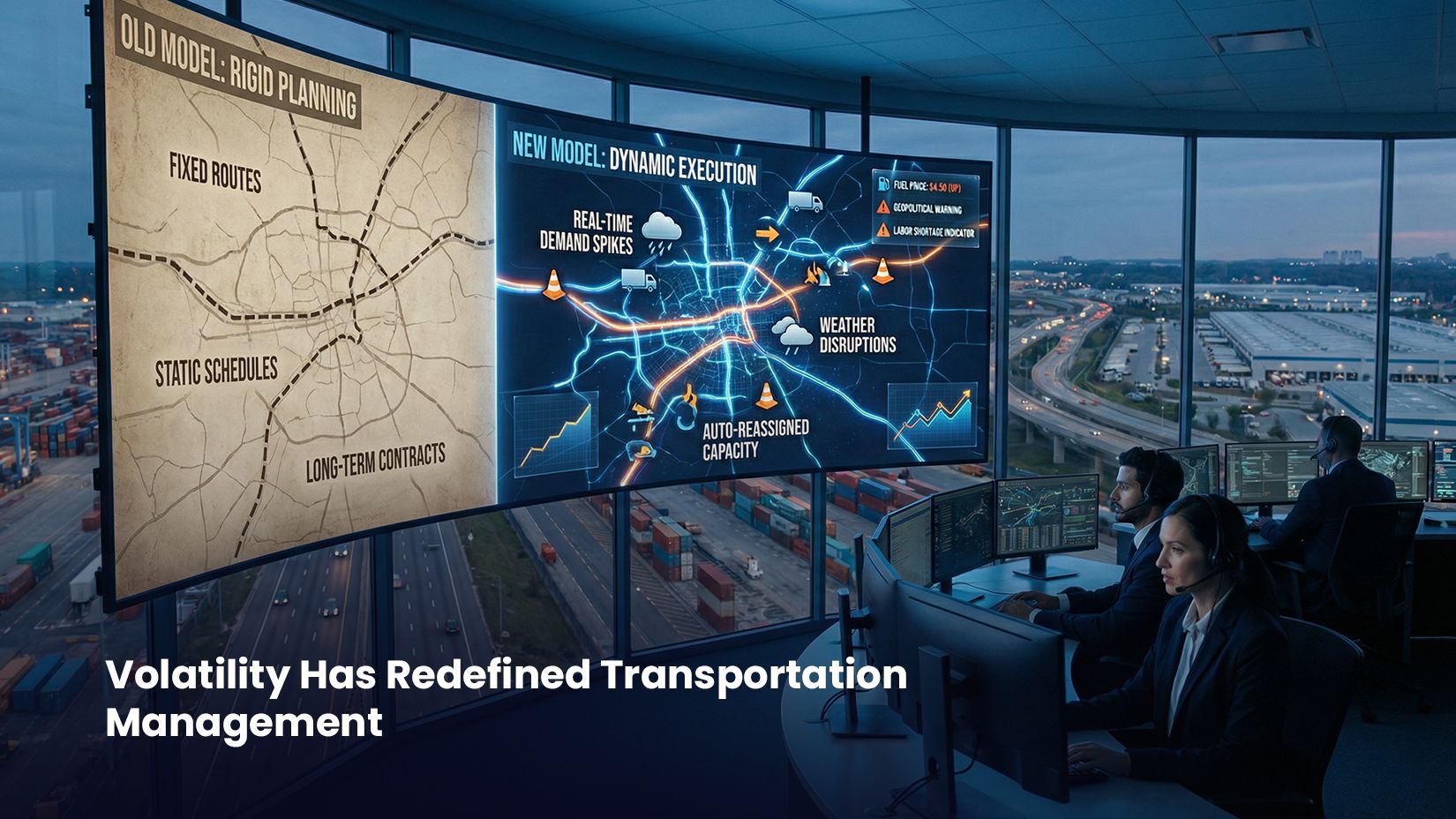
For decades, transportation strategies were built on predictability. Routes were fixed. Carrier contracts were long-term. Planning cycles ran quarterly or annually. That model assumed stable demand and manageable disruption.
According to McKinsey, supply chain disruptions now last 30-40% longer than they did ten years ago. Fuel costs can fluctuate by over 20% within a single quarter, while capacity shortages appear with little warning. Customer expectations have also risen. Nearly 80% of shippers now view delivery reliability as a competitive differentiator, not just an operational metric.
In this environment, static transportation management approaches create structural risk. Fixed routes fail when traffic conditions change. Locked-in carrier plans struggle during capacity crunches. Cost models based on historical averages quickly become inaccurate.
Transportation strategy can no longer be reviewed periodically. It must adjust continuously.
Why Legacy TMS and Static Models Fall Short
Many organizations still rely on legacy TMS platforms or fragmented tools to manage transportation. These systems were designed for execution, not volatility.
A traditional transportation management system typically depends on predefined rules and manual interventions. When disruptions occur, planners are forced to react rather than anticipate. Exception handling becomes labor-intensive. Decision-making slows down.
Gartner reports that companies using legacy transportation tools experience 2-3 times more delivery exceptions than those using modern platforms. These exceptions drive up costs, delay shipments, and damage customer trust.
Another limitation is visibility. Older transportation management software often lacks real-time data integration. Without live inputs from traffic, weather, or fleet systems, decisions are based on outdated information. In a volatile market, delayed decisions are costly decisions.
The Shift to Dynamic, AI-Driven Transportation Software
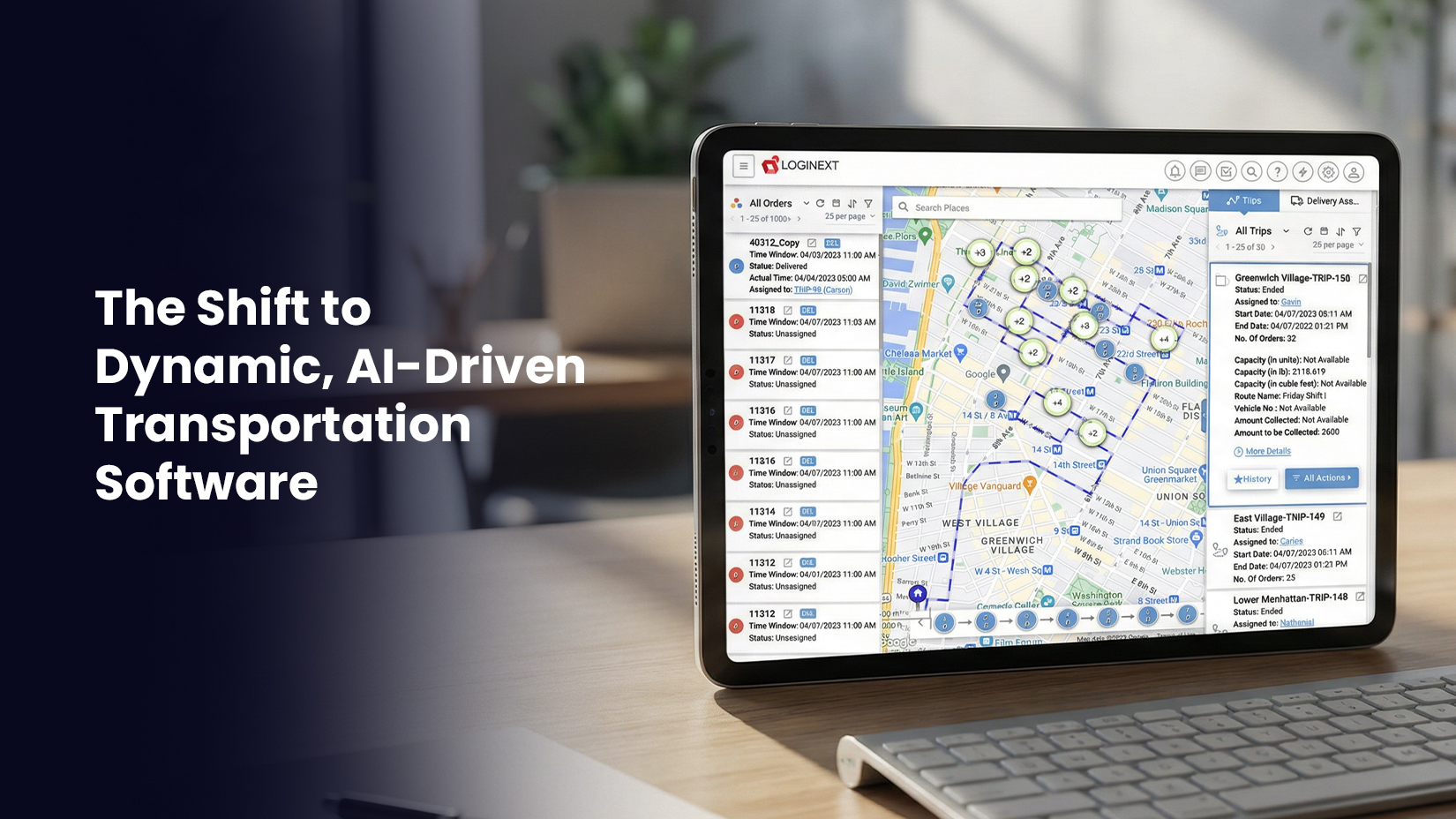
To keep pace with volatility, organizations are turning to modern transportation software built for adaptability. These platforms are cloud-based, data-rich, and increasingly powered by artificial intelligence.
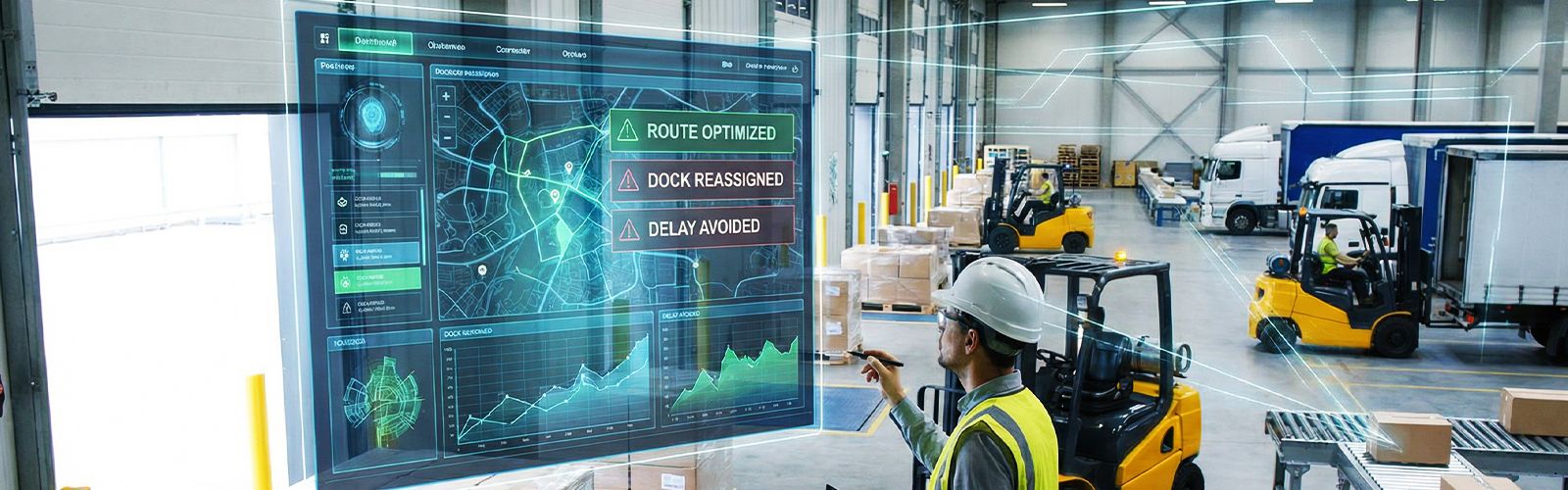
Advanced transportation management software integrates data across the supply chain, including carriers, fleets, warehouses, and order systems. This creates a real-time view of transportation operations.
The real differentiator, however, is intelligence. AI powered transportation software analyzes live and historical data to predict outcomes and recommend actions. It can dynamically optimize routes, adjust ETAs, and select carriers based on real-time performance and constraints.
According to Deloitte, companies using AI-driven transportation systems achieve 10-15% freight cost reductions while improving on-time delivery by over 20%. These gains are not the result of automation alone. They come from better decisions made faster.
Modern TMS platforms no longer ask planners to choose between cost and service. They balance both continuously.
Transportation Strategy Must Be Continuous, Not Periodic
In a volatile market, transportation strategy cannot be static or schedule-bound. Annual or quarterly planning cycles fail to capture daily fluctuations in cost, capacity, and risk.
A continuous transportation strategy, enabled by a modern transportation management system, allows organizations to respond in real time. Routes are recalculated as conditions change. Carrier selection adapts to performance trends. Costs are monitored dynamically instead of retroactively.
Data plays a central role. Modern transportation management relies on live data streams rather than static reports. When paired with AI, this data supports scenario planning and early risk detection.
For example, predictive analytics can identify shipments at risk of delay before service levels are impacted. This allows proactive intervention, rather than reactive firefighting.
In practice, continuous optimization reduces empty miles by 15-25%, improves asset utilization, and protects delivery commitments even during disruption.
Transportation Management as a Competitive Advantage
As volatility increases, transportation performance directly influences customer loyalty and revenue. Late deliveries, missed SLAs, and inconsistent visibility erode trust quickly.
Organizations that invest in modern transportation management software gain a measurable advantage. They ship faster, adapt quicker and control costs more effectively.
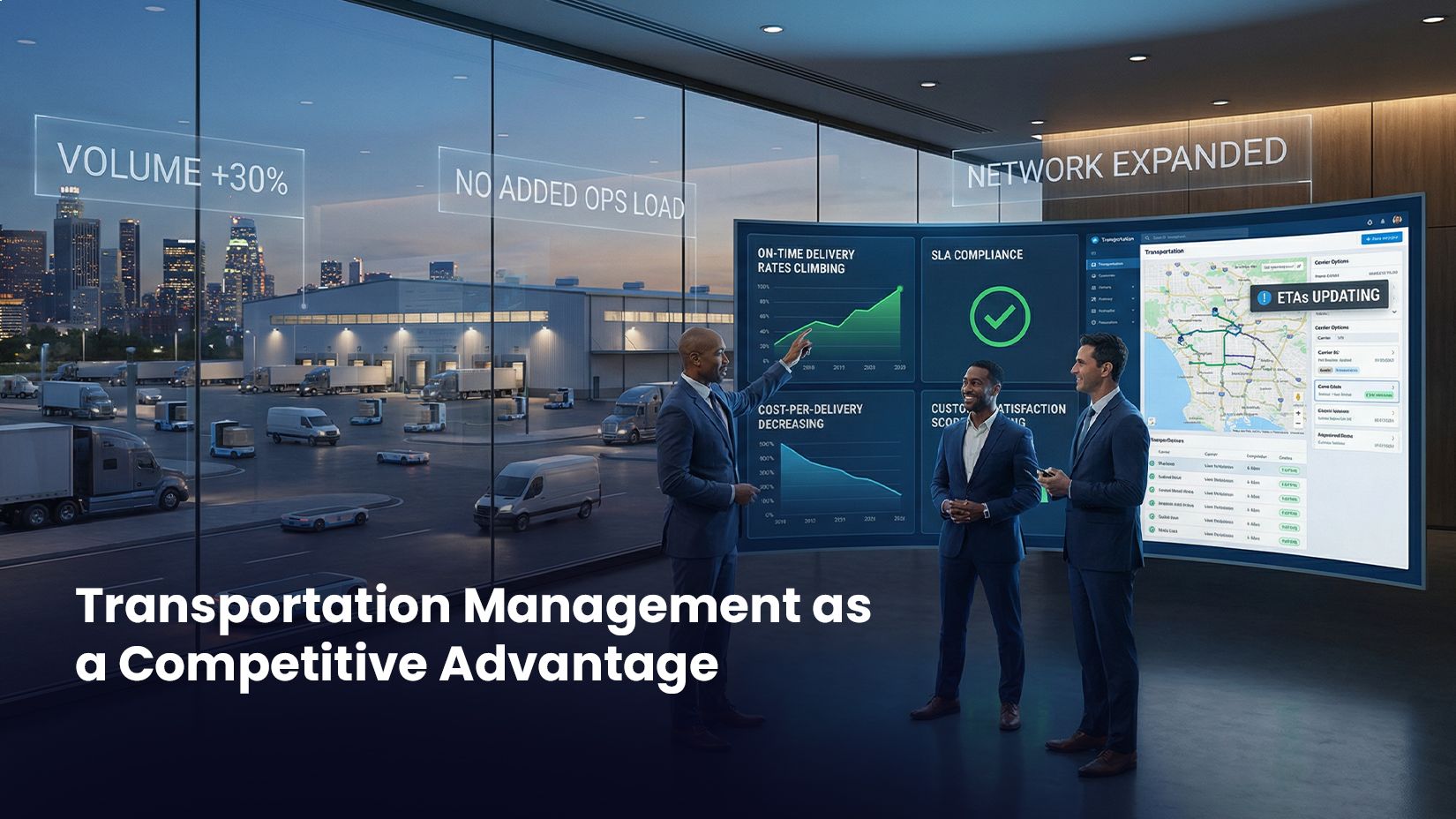
A scalable TMS also supports growth. As order volumes rise or networks expand, intelligent transportation systems absorb complexity without proportional increases in operational effort.
This is why global investment in transportation management systems continues to accelerate. Industry forecasts project double-digit growth in TMS adoption through 2030, driven largely by the need for resilience and agility.
Transportation management is no longer a back-office function. It is a strategic capability.
Conclusion
Volatility has permanently changed the logistics landscape. Static transportation strategies, built for predictability, are no longer sufficient. They increase risk, inflate costs, and undermine customer experience.
In contrast, modern transportation management—powered by intelligent transportation software, advanced TMS platforms, and AI powered transportation software, enables continuous adaptation. It turns uncertainty into a manageable variable rather than an operational threat.
In a market that never stands still, transportation strategy cannot either. The organizations that recognize this shift will be the ones that remain competitive, resilient, and ready for what comes next. So, to be a part of the shift you need the best software provided by LogiNext. Click on the red button to know more.
“”
 |  |  |




@LogiNext