




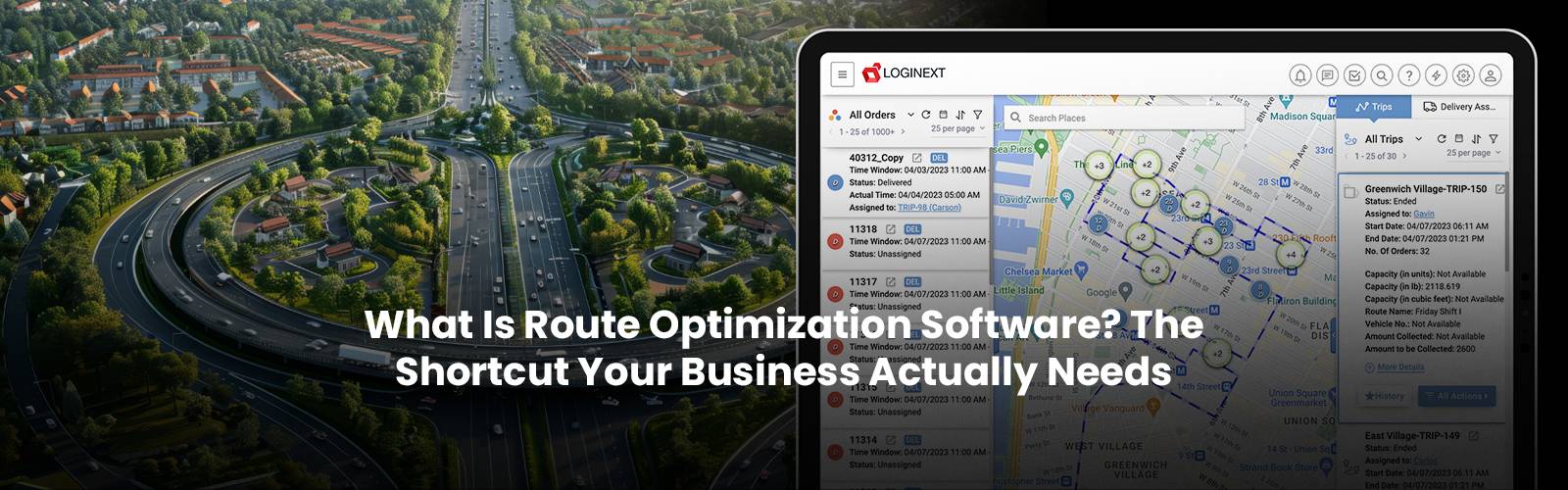
What Is Route Optimization Software? The Shortcut Your Business Actually Needs
In today’s ‘i want it now’ economy, delivery speed is not a luxury but a survival. Efficiency can make or break the bottom line, whether someone is delivering pizza or a pallet. With fuel prices varying, shortages of the driver and customer expectations at an all time high, manual planning the routes is like navigating with a paper in the world of maps. Enter route optimization software, the smart digital bypass your business actually needs.
But what is route optimization software and why does every modern logistics team needs it? This blog will tackle exactly that. Understanding what it is, why does it matter and how it is smoothly plus quietly reshaping the future of delivery operations.
What Is Route Optimization Software?
At its core, route optimization software is a tool that determines the best and the most efficient way to get from point A to B. When the point B, could be hundreds of destinations. But its not just about finding the shortest path.
This technology factors in multiple variables:
– Real-time traffic and road conditions.
– Capacity of the vehicles.
– Schedules of the drivers and hours of service.
– Disruptions caused by the weather.
– Preferences of the customer.
The software is able to crunch this data in just a few seconds. Through this it helps businesses plan smarter routes, reduce empty miles and ensure deliveries hit the mark. Not just once, but always.
A report by McKinsey, businesses have reduced operational costs by up to 20%, with the help of automated route optimization tools. They have also cut fuel usage by 15% and improved on-time delivery rates by over 25%.
How Route Optimization Technology Works
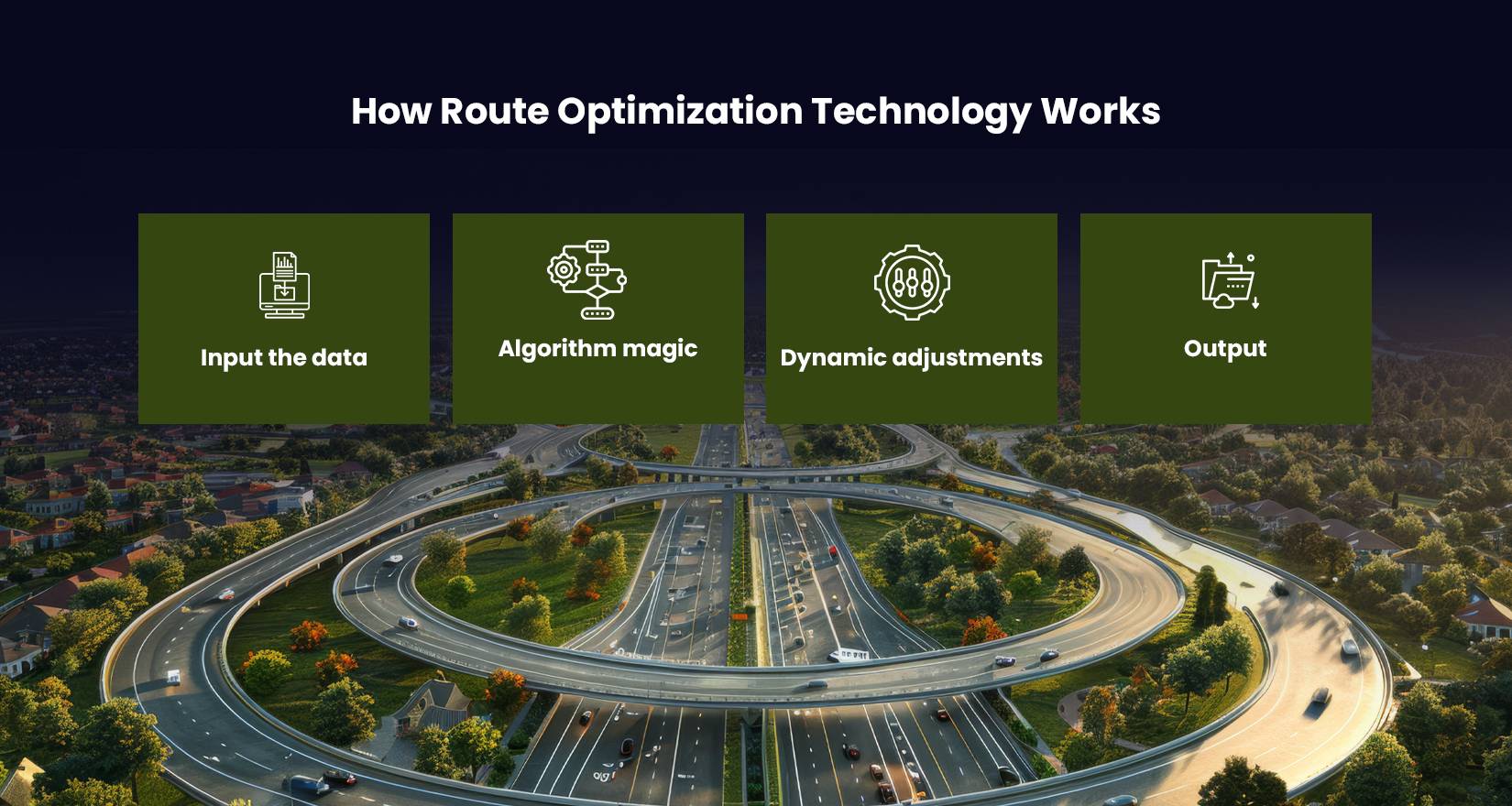
Route optimization technology is your logistics command center with a brain. It uses artificial intelligence, machine learning and predictive analytics to evaluate countless route combinations. This is something, that no human/manual dispatcher could do at the scale route optimization software is able to do.
Below is a simplified breakdown of how it works:
1. Input the Data:
You enter the delivery location, time windows and fleet size. Along with this any other peculiarities such as the type of the vehicle, load capacity or driver shift limits.
2. Algorithm Magic:
The software then processes this data using advanced algorithms like Dijkstra’s or genetic optimization to calculate the most efficient possible routes.
3. Dynamic Adjustments:
If the vehicle breaks down, there is traffic on the road or last-minute delivery arises, the system instantly recalculates the delivery routes in real-time.
4. Output:
Drivers receive the updated, optimized routes on their mobile devices. Its complete with step-by-step navigation and delivery instructions.
This constant modification ensures that every delivery runs stays efficient. Even, when the surrounding world is not able to.
The Cost of Not Using Route Optimization
Are you still planning routes manually or using the basic mapping tools? You are leaving money and efficiency on the table.
Here’s what inefficiency costs can look like:
– 20-30% higher fuel costs due to routes being unoptimized.
– 12-15% longer delivery times, as result of traffic mismanagement.
– 10% increase in carbon footprint, due to unnecessary mileage.
These numbers add up rapidly, specially when multiplied across hundreds and hundreds of daily deliveries. Even the best dispatch team cannot keep up with the complexities of modern logistics, without the a proper route optimization solution.
Why Businesses Are Switching to Route Optimization Software
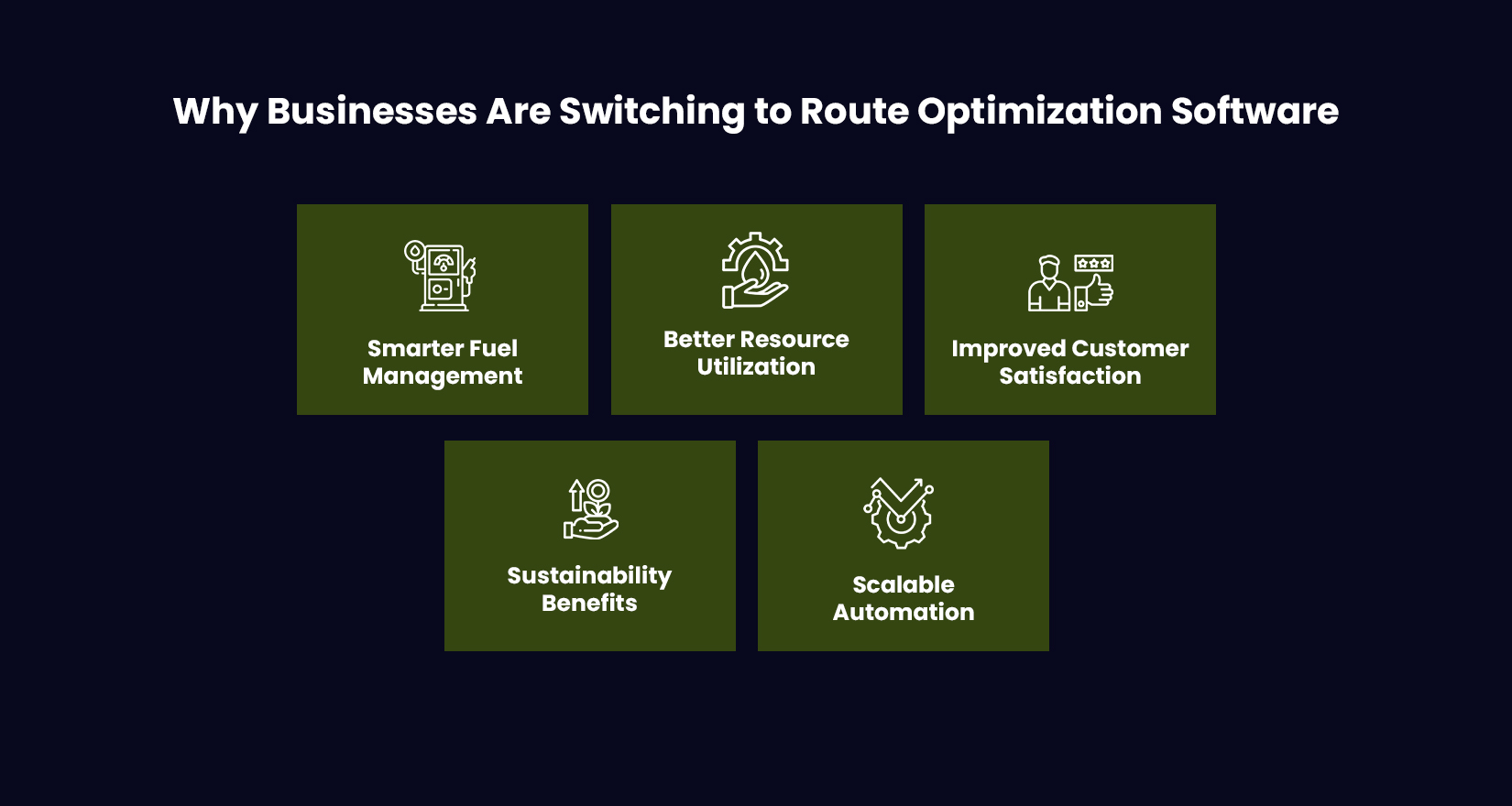
1. Smarter Fuel Management:
Fuel is one of, if not the largest operation expense in logistics. Optimized routes leads to fewer miles, less idle time and lower fuel costs. Just a simple math, with real impact.
2. Better Resource Utilization:
With maximizing the fleet capacity, businesses can handle more deliveries with fewer vehicles. Due to this there is delay in costly fleet expansion, resulting in better ROI.
3. Improved Customer Satisfaction:
Customers expect accuracy, visibility and speed. With real-time ETAs, live tracking and on-time performance, businesses are able to deliver on all the 3 fronts.
4. Sustainability Benefits:
Optimized routes helps the business in reducing fuel consumption and carbon footprints. This makes logistics greener and more compliant with ESG goals.
5. Scalable Automation:
Route optimization software scales seamlessly with the growth in business. Be it a startup managing local deliveries or a global enterprise operation massive fleets.
Route Optimization in Action: Real-World Results
Lets put some numbers behind the buzzwords.
– FedEx used advanced algorithms to optimize their routes and save millions of dollars a year in delivery mileage.
– Amazon utilizes AI-enhanced predictive routing in their last-mile operations, shortening delivery times and improving cost and fuel efficiency.
– DHL implemented its SmartTruck solution which claims to cut CO₂ emissions by 60% in certain regions.
This shows that, if some of the biggest companies are betting on the route optimization software, its not for nothing. It is clearly a great strategy to survive the competition.
How to Choose the Right Route Optimization Solution
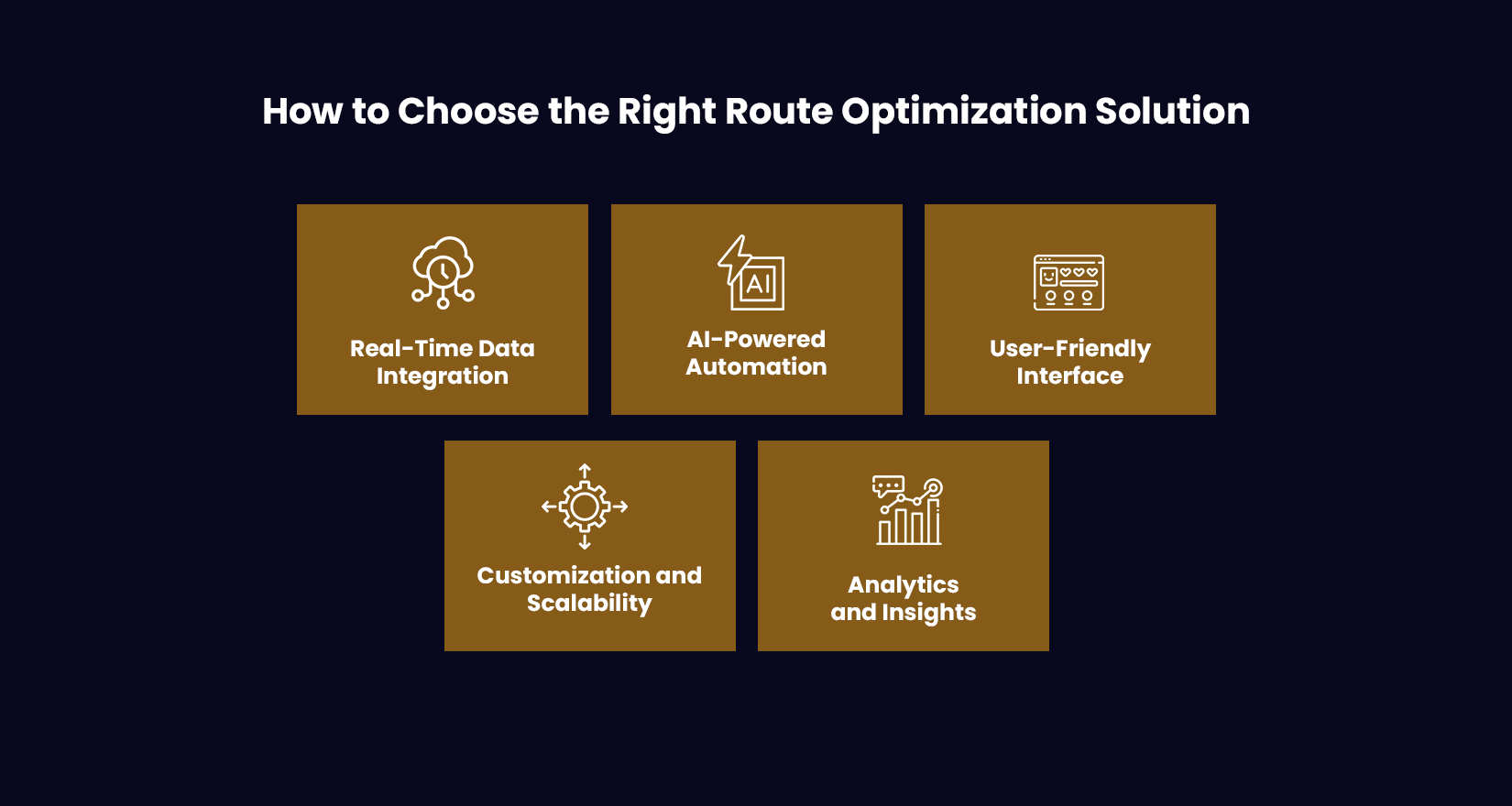
The market is filled with the tools, but all are not equal. It is important to know what to look for in a future-ready solution.
1. Real-Time Data Integration:
Static routing is obsolete in a dynamic world. Its necessary to ensure that the software connects seamlessly with GPS, traffic APIs and telematics.
2. AI-Powered Automation:
The business should look for predictive algorithms. The one that can adapt seamlessly with real-world disruptions and historical trends.
3. User-Friendly Interface:
The system should be easy to understand. If the system is powerful yet complex for the dispatchers or drivers to use, it wont serve anything.
4. Customization and Scalability:
The software should be customizable as per the needs of the business. But, it should also scale with the business, as the business grows so should the software.
5. Analytics and Insights:
Modern route optimization software, should not just plan routes but, also learn from them. Its important to get dashboards that show performance metrics, delivery times and cost savings.
The Future of Route Optimization Technology
Logistics powered by AI is not coming, its already here. Over the next couple of years, route optimization technology will become predictive, a jump from being reactive. Systems will have the capability to anticipate delays, auto-adjust routes mid-journey and even optimize energy consumption for electric vehicles.
According to Gartner, by 2027 over 75% logistics companies will rely on AI-powered optimization tools. This is not a hype, its a trajectory. Pretty soon, businesses wont ask if they need the tools, but rather how fast they can implement it.
Conclusion
The logistics game has changed a lot. Manual route planning, used to work in the past but today’s operations demand speed, precision and adaptability. Route optimization software delivers all three. Thereby, turning chaos into control and inefficiency into opportunity.
If your business is still wasting hours (and dollars) on outdated planning methods, it’s time to upgrade your solution. The road to profitability may not always be the shortest route, but with the right optimization solution, it will be the smartest route. If you’re ready to see it in action, book a demo with LogiNext and see delivery efficiency level up – fast! Click the red button to learn more.
120

|

|

|




@LogiNext