Static Plans Break Mid-Shift
Operational Pain: Route sheets cannot resequence stops when traffic, cancellations, or add-on pickups hit.
Impact: Drivers double back, overtime climbs, and promised windows slip.

Keep NYC Courier Waves Moving When Stop Density Peaks
Same-day courier volume in NYC stacks stops faster than spreadsheets can resequence them. Manual plans stall once cancellations, add-ons, and traffic hit mid-shift.
Hover or click any metric, alert, or route node to explore the narrative.
Explore the board. Each tile ties to dense NYC stop control, live dispatch, and proof of delivery.
Operational Pain: Route sheets cannot resequence stops when traffic, cancellations, or add-on pickups hit.
Impact: Drivers double back, overtime climbs, and promised windows slip.
Operational Pain: Some riders overload while others leave light because capacity is checked by hand.
Impact: Extra trips raise cost per delivery and cut fleet utilization.
Operational Pain: Planners lose a shared view of progress and exceptions once couriers leave the hub.
Impact: More check calls, slower recovery, and weaker customer updates.
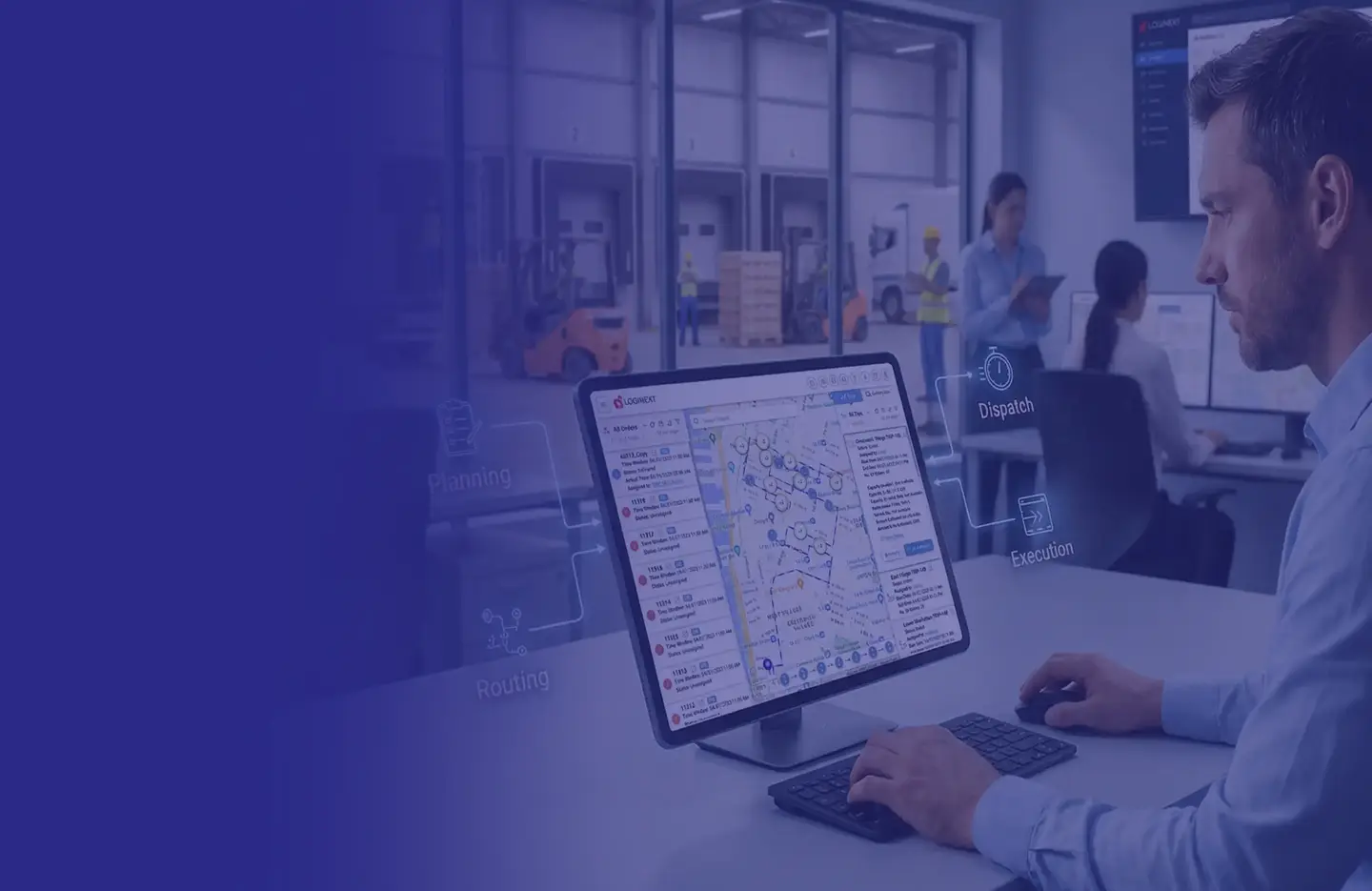
Pulls same-day and scheduled courier orders into one plan with windows and service rules.
Balances stop density, vehicle capacity, and courier availability before routes leave the hub.
Sequences every stop against live conditions to cut empty miles and protect delivery windows.
Sends optimized stop lists to driver apps with clear handoffs and live updates.
Tracks progress, handles exceptions early, and captures proof of delivery at each stop.
On-time delivery rate: 0%. Stops land inside promised windows with fewer second attempts.
Faster deliveries: 0%. Optimized sequences help couriers clear more stops in the same shift.
Lower delivery cost: 0%. Fewer empty miles and less overtime bring unit cost down.
Less planning time: 0%. Automated dispatch cuts spreadsheet rebalancing so planners focus on exceptions.
Operational Challenge: Lunch and dinner peaks overwhelm manual same-day dispatch.
Solution: Automated food delivery routing assigns riders the moment an order is ready.
Business Outcome: Hotter food on arrival and fewer missed promise times.
Operational Challenge: Hundreds of stops with tight pickup and drop windows.
Solution: Automated dispatch absorbs pickups into active multi-stop itineraries.
Business Outcome: Denser routes and faster exception recovery on parcel runs.
Operational Challenge: Multiple clients and service levels share one NYC courier fleet.
Solution: Multi-client planning keeps each contract measured on its own terms.
Business Outcome: Client-level service reporting without extra spreadsheets.
Operational Challenge: Two-person jobs and appointment slots that cannot be missed.
Solution: Last-mile planning books realistic slots and resequences stops live.
Business Outcome: Fewer failed installs and cleaner customer handovers.
LogiNext works as the planning and dispatch layer across the systems your team already runs, so planners work in one place instead of four.
See how LogiNext supports delivery teams on related live city pages.
Courier service software in NYC manages order intake, route planning, courier assignment, live dispatch, exception handling, and proof of delivery so planners and drivers work from one plan.
LogiNext balances stop density, vehicle capacity, and time windows automatically. When traffic, cancellations, or add-on orders hit, routes can be resequenced without rebuilding the whole day from a spreadsheet.
Yes. LogiNext connects to ERP, WMS, GPS and vehicle tracking hardware, and order channels through flexible APIs, without forcing teams to replace their existing stack.
QSR chains, courier and parcel operators, 3PL providers, grocery fleets, and big and bulky delivery teams use LogiNext to plan multi-stop routes, dispatch couriers, and capture proof of delivery.
Teams can target a 95% on-time delivery rate, 40% faster deliveries, 18% lower delivery cost, and 35% less planning time. Actual results depend on network conditions and operating constraints.
LogiNext provides onboarding support, API documentation, and a dedicated team. Most courier operations are live within a few weeks.
See how LogiNext connects courier planning, live dispatch, and proof of delivery for your NYC team.