


Learn how last mile delivery software cuts costs by 40%, reduces failed deliveries, and improves customer satisfaction. Features, trends, solutions & ROI.
What is the Last Mile in Delivery? Why Does It Matter?
The last mile is the final stage of logistics where packages travel from a distribution center or warehouse to your customer’s doorstep. It’s the most visible stage of delivery, yet it accounts for 53% of total shipping costs.
Why should you care? Because 93% of customers expect real-time delivery updates, and failed deliveries (5-10% of all deliveries) directly impact your revenue and brand reputation. Without proper last mile delivery software, your logistics costs spiral, delivery times increase, and customers abandon their purchases at checkout.
| Metric | Impact |
| Last Mile Cost % | 53% of total shipping cost |
| Customer Expectations | 93% expect real time tracking updates |
| Failed Deliveries | 5-10% of all deliveries fail on first attempt |
| Support Cost Reduction | Real time tracking reduces support queries by 15-20% |
How Last Mile Delivery Software Improves Delivery Operations
In the rapidly evolving landscape of eCommerce and logistics, ensuring timely delivery is a top priority for businesses. Last mile delivery, the final step of the delivery process from a distribution center to the end customer, is a critical phase that can make or break customer satisfaction. As the demand for faster, more efficient deliveries grows, so does the need for robust last mile delivery software solutions. This comprehensive guide explores everything you need to know about last mile delivery software. Its significance, key features, and how it addresses the challenges in the last mile delivery process.
What is Last Mile Delivery?
Last mile delivery is the final stage in the logistics process where goods are transported from a transportation hub or warehouse to the final destination. It is generally the most costly and lengthy part of the supply chain, accounting for nearly 53% of total shipping costs. The primary goal of last mile delivery is to deliver items to customers as quickly and efficiently as possible. To achieve this, businesses rely on advanced last mile delivery software that offers real-time visibility, route optimization, and efficient management of delivery operations.
What is the “Last Mile Problem”?
The “Last Mile Problem” refers to the inefficiencies and high costs associated with the final leg of delivery. Unlike other stages of the supply chain that involve bulk shipments, last mile delivery is characterized by frequent stops, low drop sizes, and varying customer preferences. This complexity often leads to increased delivery times, higher costs, and challenges in managing resources effectively.
Studies show that failed deliveries account for 5-10% of all deliveries, further adding to costs and inefficiencies. Additionally, urban congestion, varying delivery windows, and the expectation for real-time tracking add layers of complexity. To tackle these challenges, businesses are turning to last mile delivery solutions that offer sophisticated tracking systems and advanced algorithms for route optimization.
How Does Last Mile Delivery Software Work? Step-by-Step Process
Last mile delivery software automates and optimizes the journey from warehouse to customer. Here’s how it works:
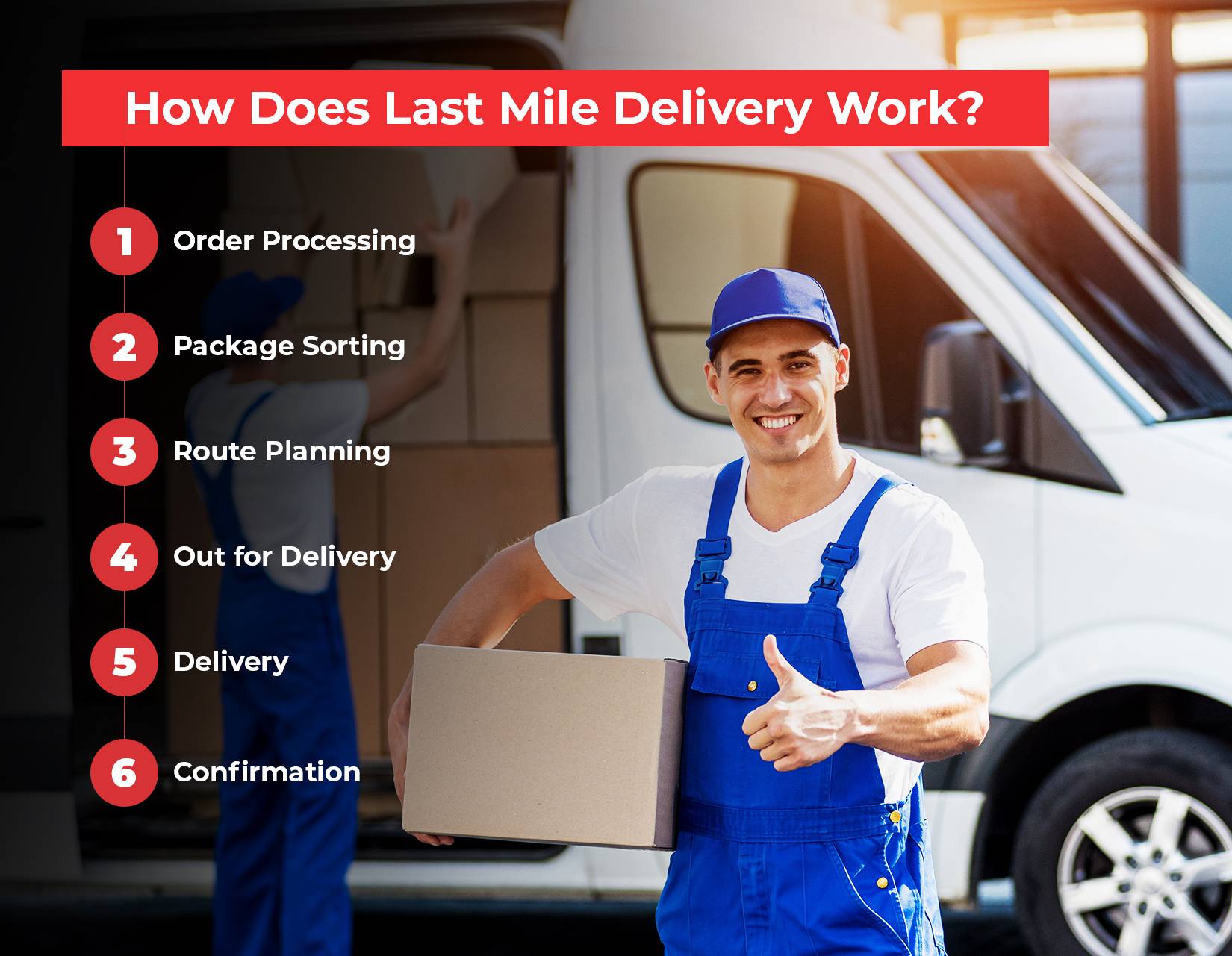
Suggested: Flow diagram showing Order → Sort → Route Plan → Dispatch → Track → Deliver → Confirm
1. Order Processing & Package Sorting Processing: When a customer places an order, the software automatically assigns it to the nearest warehouse and sorts packages for local delivery routes.
2. AI-Powered Route Optimization: The system calculates the most efficient delivery route using AI algorithms that consider traffic patterns, delivery windows, vehicle capacity, and driver availability. Result: 20% reduction in delivery costs and fuel consumption.
3. Automated Driver Dispatch Planning: Deliveries are automatically assigned to the optimal driver based on proximity, vehicle capacity, and delivery windows. No manual assignment needed.
4. Real-Time GPS Tracking for Delivery: Both dispatchers and customers track deliveries in real-time on a live map. GPS updates every 30-60 seconds, providing accurate ETAs and reducing customer support inquiries by 15-20%.
5. Proof of Delivery (ePOD): The driver captures digital signatures, photos, or barcodes at delivery point, syncing instantly to the system for accountability and proof.
What Are the Most Important Features of Last Mile Delivery Software?
Every last mile delivery platform should include these 8 core features:
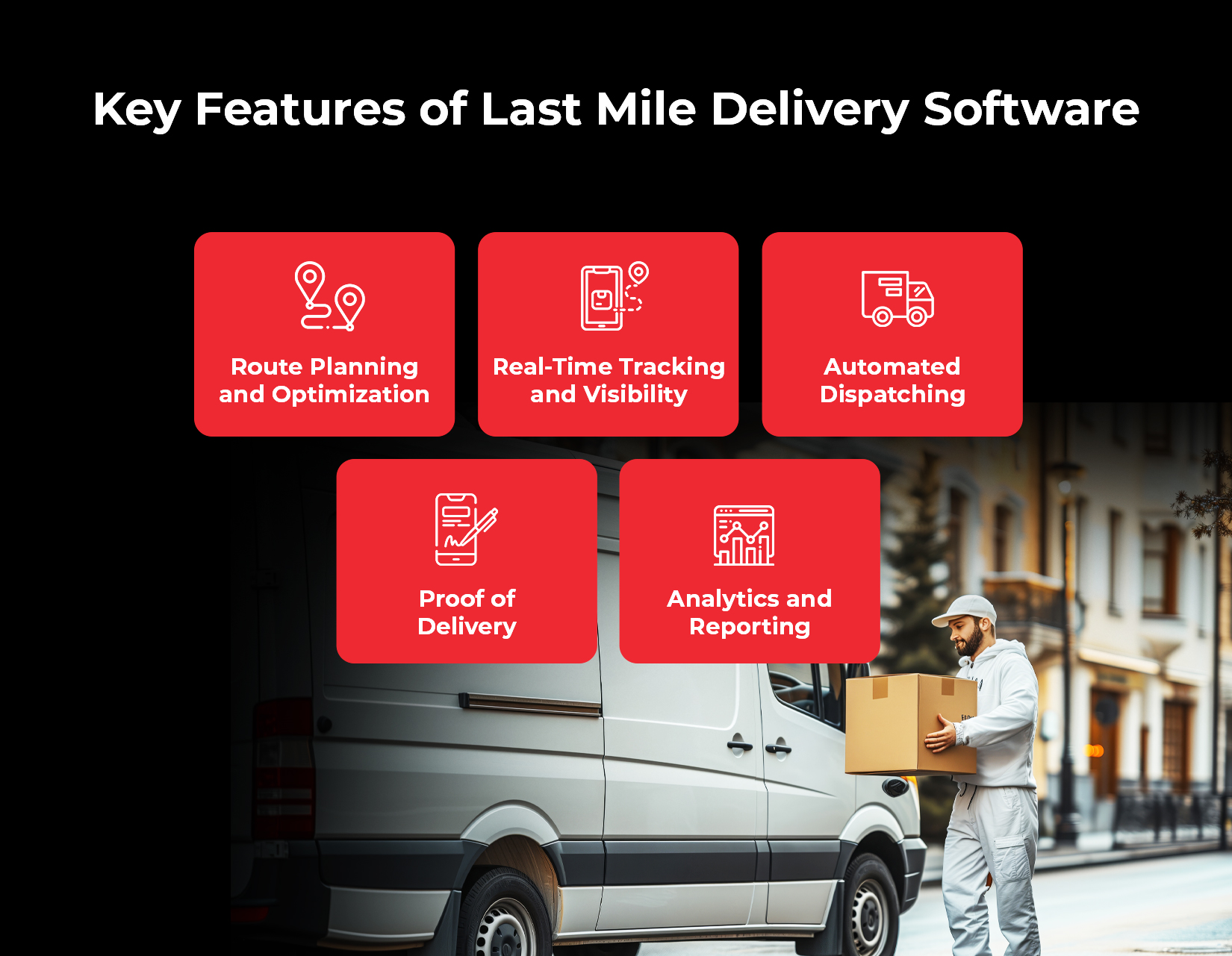
Last mile delivery software solutions offer a range of features designed to streamline delivery processes and enhance efficiency:
1. Route Optimization with AI
Machine learning algorithms calculate optimal routes considering real-time traffic, delivery windows, vehicle capacity, and driver shifts. Reduces delivery costs by 15-40%.
2. Real-Time Tracking & GPSbility:
Live GPS tracking for drivers and packages updates every 30-60 seconds. Customers see accurate ETAs, reducing support calls by 15-20%.
3. Automated Dispatch & Assignment
System automatically assigns deliveries to optimal drivers based on location, capacity, and delivery windows. Improves efficiency by 30%.
4. Proof of Delivery (ePOD)
Capture digital signatures, photos, or QR codes at delivery point. Instant sync reduces invoice discrepancies and improves accountability.
5. Delivery Performance Analytics
Dashboard shows key metrics: on-time delivery %, failed deliveries, average delivery time, fuel cost per delivery, and driver performance ratings.
How Fast is the Last Mile Delivery Software Market Growing?
The global last mile delivery market is expected to grow from USD 108.1 billion in 2020 to USD 200.4 billion by 2027, at a CAGR of 9.3%. This growth is driven by the rise in eCommerce, increased consumer demand for fast delivery, and the adoption of advanced technologies such as AI, machine learning, and IoT in delivery management.
The market is also seeing a surge in investment in eCommerce last mile delivery software and autonomous delivery solutions, further propelling its growth. A study by ResearchAndMarkets forecasts that the market for last mile delivery robots alone will reach USD 10.4 billion by 2030, highlighting the increasing reliance on technology-driven solutions.
Key growth drivers include: E-commerce surge post-COVID (2021-2026) • Customer demand for same-day/next-day delivery • AI and machine learning adoption (40% cost reduction potential) • Autonomous delivery robots (projected $10.4B market by 2030) • Sustainability focus (carbon-neutral shipping options)
What Are the Top Last Mile Delivery Trends for 2025-2026?
Trend 1: Faster Delivery Windows
70% of consumers now prioritize delivery speed. Software enables 2-hour delivery windows and same-day guarantees through dynamic routing.
Trend 2: Real-Time Customer Updates
80% of customers expect real-time tracking during delivery. This expectation is now table stakes for retention.
Trend 3: Flexibility & Delivery Rescheduling
Businesses offering flexible delivery rescheduling see 30% improvement in customer retention. Software enables real-time plan changes.
Trend 4: Sustainable & Carbon-Neutral Options
40% of e-commerce deliveries by 2025 include sustainable options. Software calculates carbon footprint and optimizes eco-friendly routes.
Trend 5:Online Tracking:
With online tracking, customers can now see their items in real time, making it an essential part of last mile delivery. According to a MetaPack poll, 82% of consumers are more inclined to make a purchase from a store that offers real-time tracking.
Trend 6: AI-Powered Predictive Routing
AI predicts traffic patterns 24 hours ahead, automatically rerouting to prevent delays. McKinsey: automation can reduce delivery costs by 40%.
4 Ways Technology Can Solve Your Biggest Last Mile Delivery Challenges
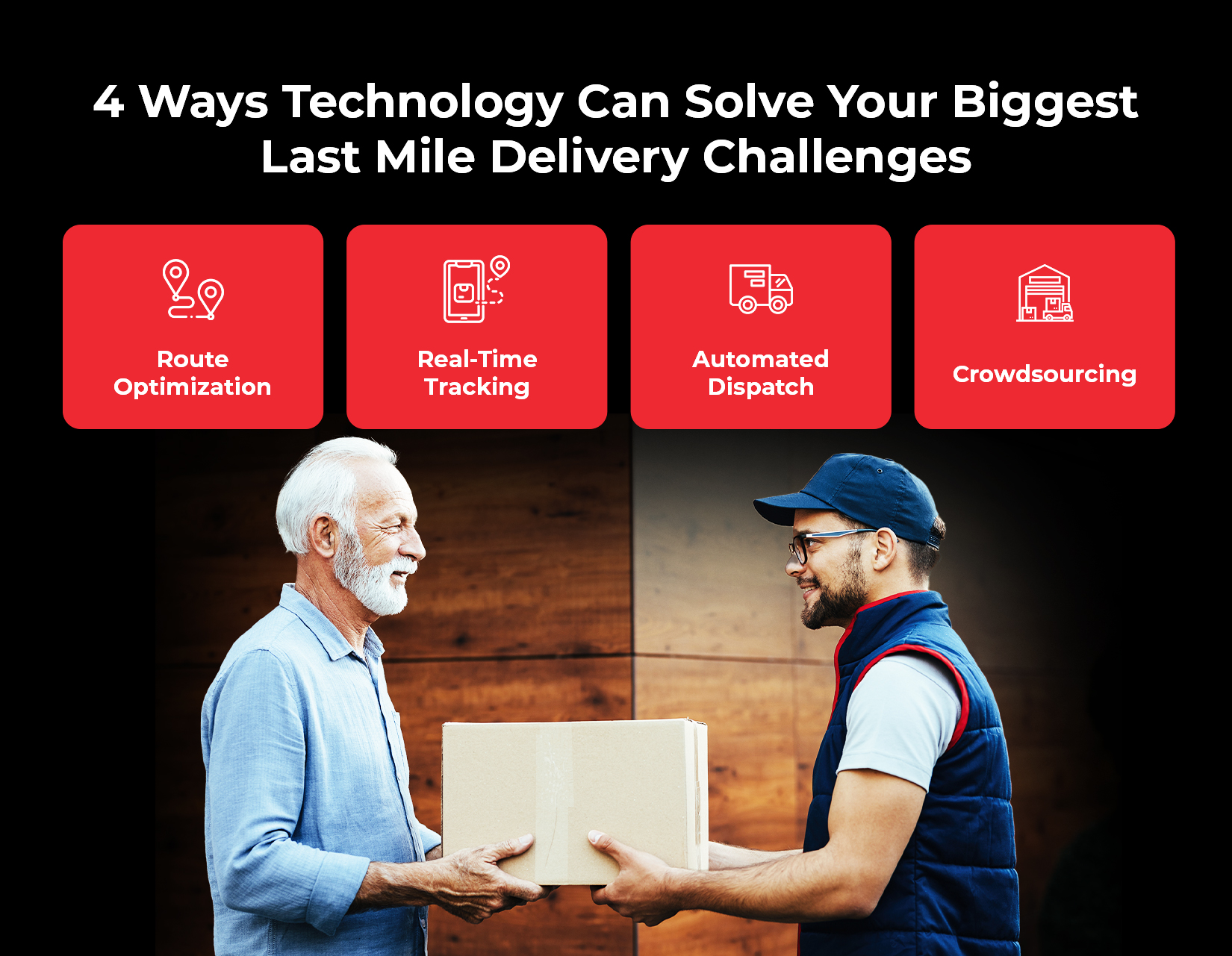
1. Route Optimization:
Advanced last mile delivery route optimization algorithms calculate the most efficient routes, reducing delivery times and fuel consumption. By optimizing routes, companies can ensure timely deliveries, minimize costs, and enhance customer satisfaction. According to a report by Capgemini, optimized routing can reduce delivery costs by up to 20%.
2. Real-Time Tracking:
Modern last mile tracking systems provide real-time visibility into delivery processes, allowing customers to track their orders and logistics managers to monitor delivery performance. This transparency helps reduce failed deliveries and enhances customer trust. In fact, 69% of customers expect to track their orders in real time, highlighting the importance of robust tracking capabilities.
3. Automated Dispatch:
Automation tools streamline the assignment of delivery tasks to drivers based on proximity, delivery windows, and traffic conditions. This not only improves efficiency but also reduces manual errors and operational costs. McKinsey research indicates that automated dispatch systems can improve delivery efficiency by up to 30%.
4. Crowdsourcing:
Leveraging crowdsourcing models allows companies to tap into a flexible, on-demand workforce. This model can significantly reduce delivery costs and improve scalability, particularly during peak seasons. Companies using crowdsourced delivery models have reported cost savings of up to 50% compared to traditional delivery models.
How Does Crowdsourcing Solve the Last Mile Problem?
Crowdsourcing in last mile delivery involves utilizing independent contractors or gig workers to handle deliveries. This model offers several advantages:
1. Flexibility: Crowdsourcing allows companies to scale their workforce up or down based on demand, which is particularly beneficial during peak periods or sudden surges in order volume. During the COVID-19 pandemic, companies using crowdsourcing reported a 40% increase in delivery capacity due to flexible labor options.
2. Cost Savings: By relying on a flexible workforce, businesses can reduce labor costs associated with full-time employees, such as salaries, benefits, and overtime pay. Research shows that crowdsourced deliveries can reduce labor costs by 20-30%.
3. Increased Reach: Crowdsourcing enables companies to extend their delivery network into areas that are less profitable for traditional delivery models, ensuring broader geographic coverage.
Products in Last Mile Delivery Software Market
Several products and solutions are available in the last mile delivery technology market:
1. Delivery Management Software: Platforms like LogiNext and Onfleet offer comprehensive delivery management solutions with features such as route optimization, real-time tracking, and automated dispatching.
2. Last Mile Delivery Tracking Software: Solutions that provide advanced tracking capabilities, allowing customers and businesses to monitor deliveries in real time. By 2025, it is estimated that 90% of companies will adopt real-time tracking systems to enhance transparency and customer experience.
3. Autonomous Delivery Solutions: Companies are exploring the use of drones, robots, and autonomous vehicles to enhance delivery speed and reduce costs. Amazon and Google have already launched pilot programs using drones for deliveries, with expectations that drone deliveries will reach 1 million annually by 2026.
4. Crowdsourcing Platforms: Solutions like Uber Eats and DoorDash that utilize gig workers for flexible, on-demand delivery.
How to Choose the Best Last Mile Delivery Software
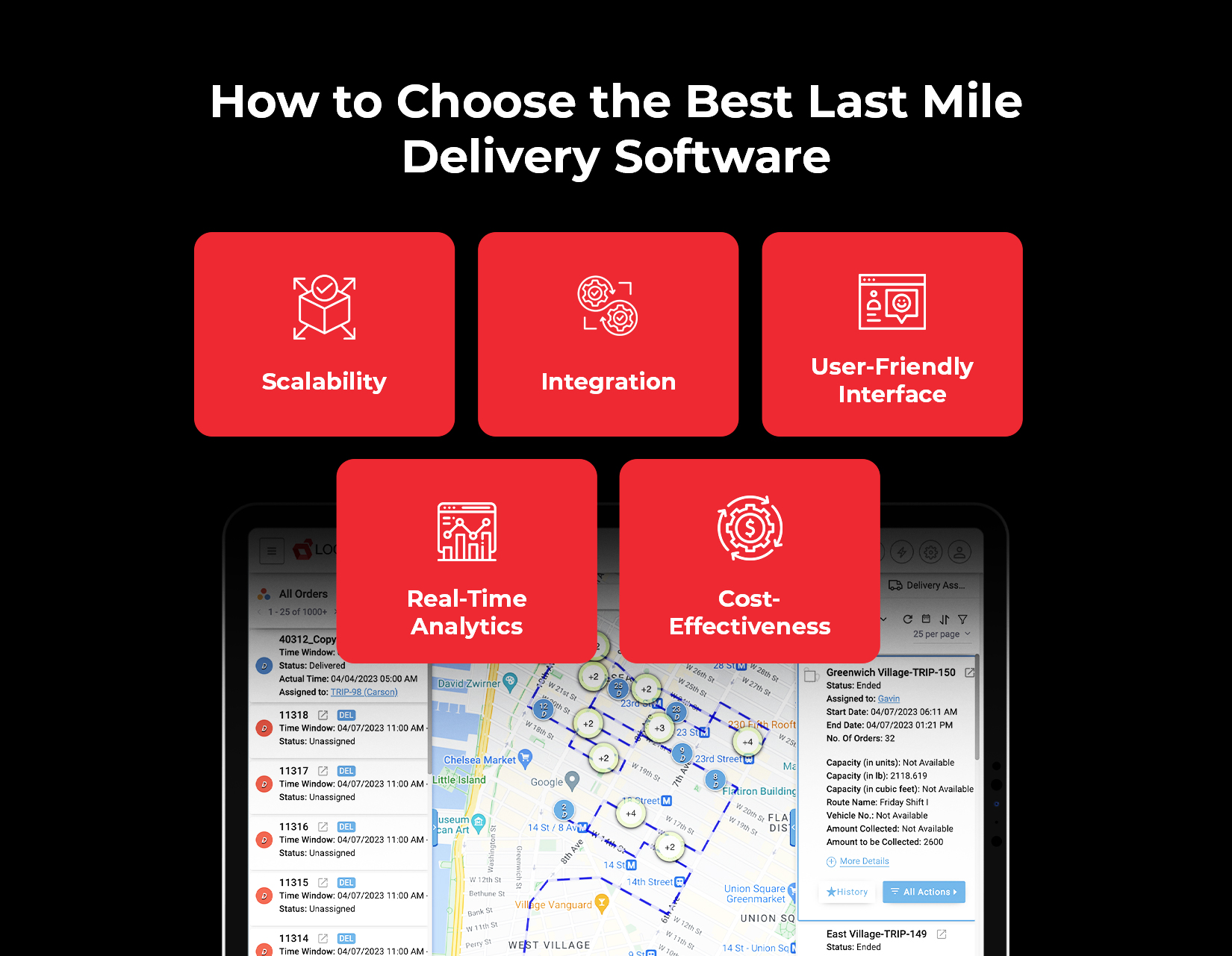
1. Scalability:
Ensure the software can scale with your business as it grows, accommodating more orders, customers, and delivery locations.
2. Integration:
The software should seamlessly integrate with your existing systems, such as inventory management, CRM, and order management systems.
3. User-Friendly Interface:
A user-friendly interface for both administrators and delivery personnel is crucial for smooth operations and minimal training time.
4. Real-Time Analytics:
The ability to generate real-time reports and analytics on delivery performance, driver efficiency, and customer satisfaction is vital for continuous improvement.
5. Cost-Effectiveness:
Evaluate the total cost of ownership, including licensing fees, implementation costs, and ongoing maintenance, to ensure it fits your budget.
Best Last Mile Delivery Software Solutions: 2025-2026 Rankings
1. LogiNext Mile: Best for Enterprise Scalability
LogiNext Mile is a comprehensive delivery management platform for enterprises. Features: AI route optimization, real-time tracking, automated dispatch, ePOD capture, advanced analytics, multi-carrier support. Ideal for: Large logistics companies, 3PLs, and enterprise retailers handling 1,000+ daily deliveries. Integration: Seamless API with ERP, WMS, and eCommerce platforms.
2. Locus: Best for AI-Driven Intelligence
Locus emphasizes data-driven optimization with advanced ML algorithms. Features: Predictive routing, demand forecasting, resource optimization. Best for: Data-heavy logistics operations needing predictive analytics.
3. FarEye: Best for Global Operations
FarEye supports multi-country operations with localized features. Ideal for international e-commerce and logistics companies.
4. Shipsy: Best for Shipping & Freight
Shipsy integrates shipping, freight forwarding, and last mile. Multi-carrier support and shipment tracking.
5. Onro:
Onro is systematic last mile delivery software offering complete visibility for an enhanced customer experience. They design branded on-demand delivery software for businesses that wish to grow significantly in the last mile delivery business. It offers services like courier software, on-demand delivery, and pickup and delivery for its clients.
6. ClickPost:
ClickPost is a leading last mile delivery management software that offers dynamic route optimization, multi-carrier integration, automated communication, and intelligent exception handling. It helps businesses streamline operations, improve customer experiences, and maintain a competitive edge in logistics.
7. TrackPOD:
TrackPOD stands out as a leading software solution empowering businesses to streamline their logistics operations and deliver exceptional customer experiences. With its comprehensive suite of features and innovative capabilities, TrackPOD has emerged as a top choice for businesses seeking to optimize their last mile delivery processes.
8. OnFleet: Best for User-Friendly Interface
Onfleet is known for its intuitive, easy-to-use dashboard and mobile app. Features: Dynamic routing, real-time tracking, proof of delivery, customer notifications. Best for: Mid-market delivery businesses (50-500 daily deliveries), SMB logistics.
Check-Out: Top 8 Last Mile Delivery Software for 2026. To get a more detailed view on the software’s.
FAQs
1. What are the biggest challenges in last mile delivery?
The biggest challenges include high delivery costs, traffic congestion, failed delivery attempts, inefficient route planning, and rising customer expectations for faster deliveries. Last mile delivery software addresses these challenges through automated dispatch, route optimization, real-time tracking, and delivery analytics that improve both operational efficiency and customer experience.
2. What features should businesses look for in last mile delivery software?
The best last mile delivery software should include AI-powered route optimization, automated dispatch, real-time tracking, proof of delivery (ePOD), driver management, customer notifications, analytics, and integrations with ERP, WMS, and eCommerce platforms. These features help businesses reduce costs, improve on-time deliveries, and scale operations efficiently.
3. Why should businesses choose LogiNext for last mile delivery management?
LogiNext provides an AI-powered last mile delivery platform that helps businesses optimize routes, automate dispatch, provide real-time shipment visibility, manage drivers, and capture digital proof of delivery. With predictive ETAs, intelligent delivery orchestration, and seamless integrations with existing business systems, LogiNext enables enterprises to reduce delivery costs, improve on-time performance, and deliver a superior customer experience.
Conclusion: Is Last Mile Delivery Software Right for Your Business?
As the demand for fast, reliable deliveries continues to grow, businesses must invest in robust last mile delivery software to stay competitive. From route optimization to real-time tracking and crowdsourcing, these solutions offer a range of features to address the challenges of last mile delivery and enhance customer satisfaction. By choosing the right software such as LogiNext Mile and leveraging advanced technologies, businesses can streamline their delivery operations, reduce costs, and gain a competitive edge in the market. Click on the red button below and book a demo with LogiNext Mile to streamline your last mile delivery today!
“”237
 |  |  |




@LogiNext