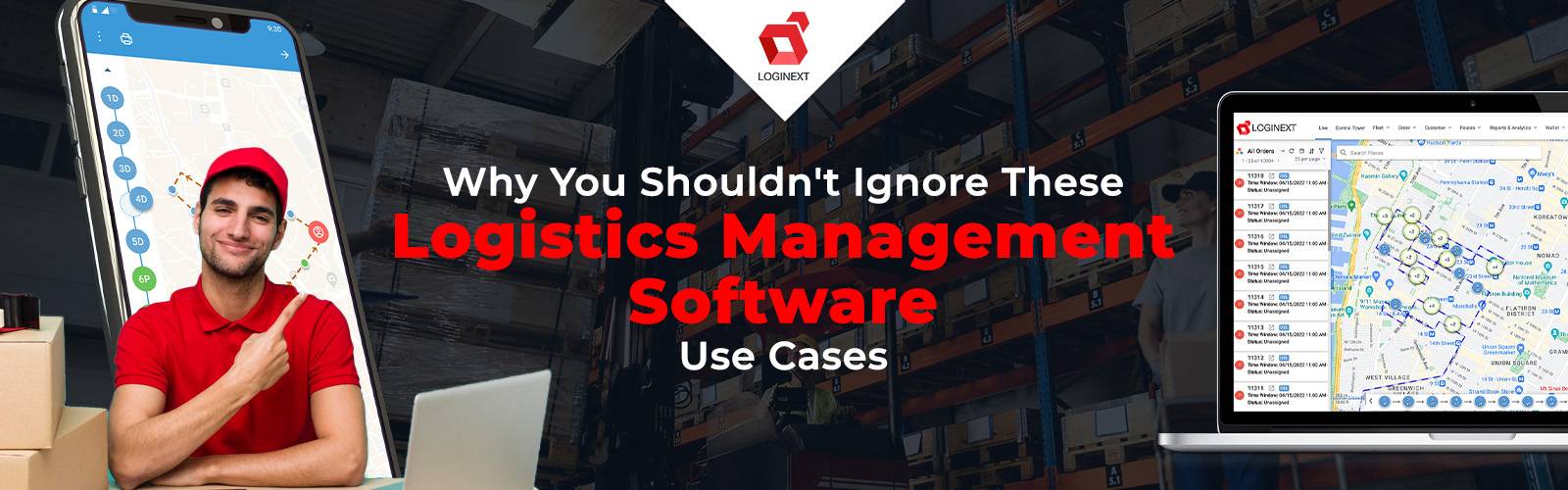
Efficient and reliable logistics management software has become the need of the hour. However, many businesses overlook the importance of optimizing their logistics processes. This often leads to significant financial losses, dissatisfied customers, and damage to their brand reputation. However, there’s a solution that can transform your logistical challenges into opportunities for growth and success: LogiNext.
Key Takeaways
- Inefficient routing and scheduling can increase fuel consumption, delivery times, and operational costs.
- Without data-driven insights, businesses may struggle to identify inefficiencies, forecast demand, and make informed logistics decisions.
- Manual processes and poor resource allocation can significantly increase transportation, driver, and warehousing costs.
- Outdated logistics systems can make it difficult for businesses to scale operations as order volumes and market requirements change.
- Seamless third-party carrier integration helps businesses coordinate multiple carriers while maintaining consistent delivery operations.
- Modern logistics management software can help businesses automate processes, improve visibility, optimize resources, and support scalable operations.
What Problems Can Arise Without Logistics Management Software?
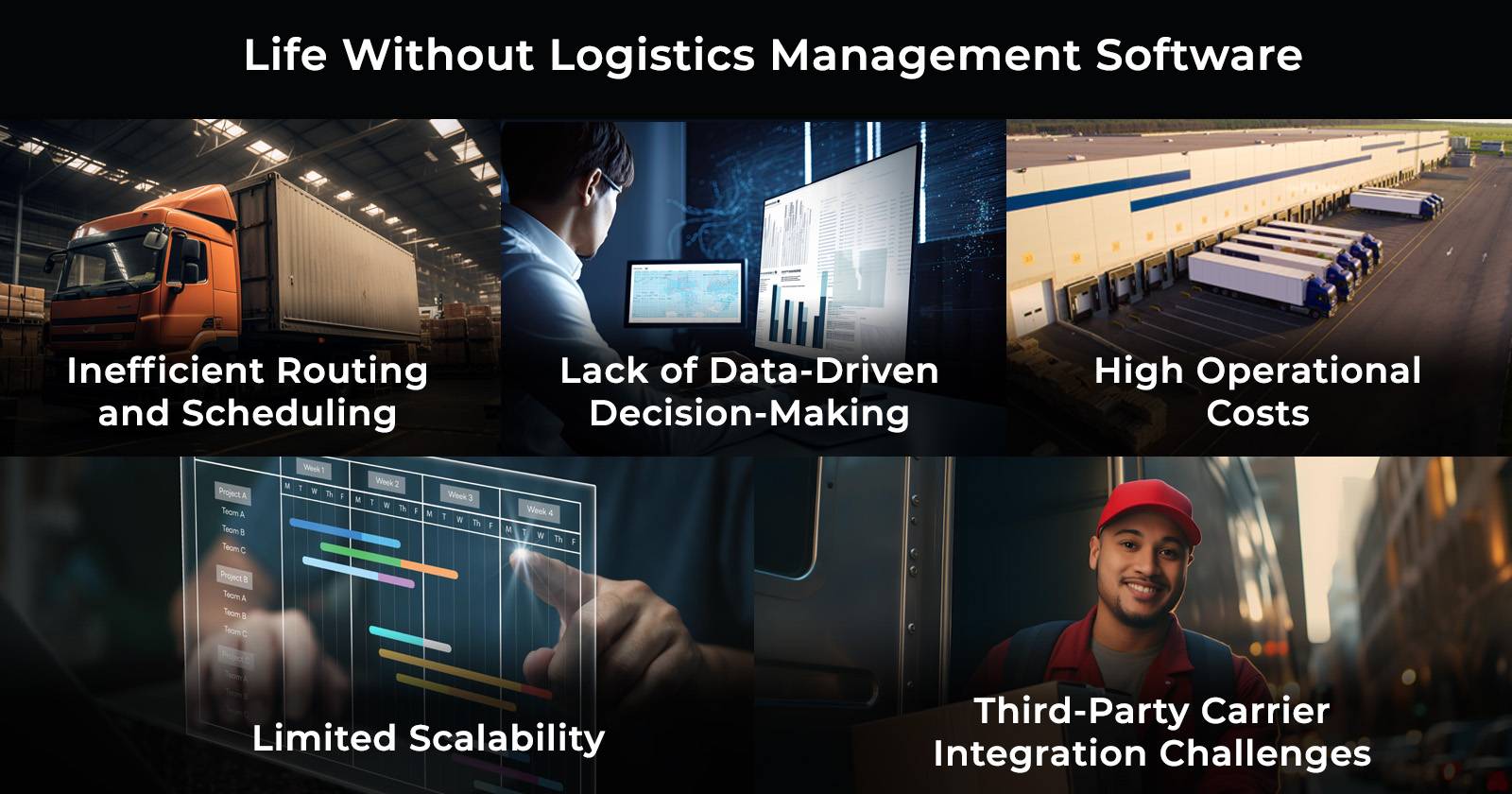
1. Inefficient routing and scheduling:
With proper logistics management software, businesses can optimize their delivery routes and schedules. This inefficiency can lead to increased fuel costs, longer delivery times, missed deadlines, and unhappy customers. This is due to late or inaccurate deliveries. Over time, these issues can result in financial losses, decreased customer satisfaction, and damage to the brand’s reputation.
Did you know? Inefficient routing can increase fuel costs by up to 20% and contribute to 30% more emissions.
2. Lack of data-driven decision-making:
Logistics management software provides valuable data and analytics to inform strategic decision-making processes. Ignoring this software means missing out on insights into key performance metrics, customer preferences, market trends, and operational efficiency.
Without data-driven decision-making capabilities, businesses may make poor pricing, product assortment, inventory replenishment, and resource allocation choices. This can result in lost revenue opportunities, increased operational costs, and lower competitiveness in the market.
Industrial Stat- Data-driven decision-making has been shown to increase company productivity and profitability by 5% to 6%.
3. High operational costs:
Inefficient logistics processes contribute significantly to high operational costs for businesses. Manual handling of tasks, inefficient routing, and lack of automation lead to excessive spending on driver, transportation, and warehousing. These costs can quickly eat into a company’s revenue, impacting profitability and hindering growth opportunities.
Without effective measures in place to streamline operations and reduce operational costs, businesses may find themselves struggling to remain competitive in their respective markets.
Did you know? High operational costs can eat up to 75% of a company’s revenue.
4. Limited scalability:
Outdated logistics systems pose a significant challenge to a business’s scalability. As companies grow and expand, their logistics requirements evolve, necessitating systems that can adapt to changing needs. However, inefficient processes and legacy systems often become bottlenecks in scalability.
Without scalable logistics solutions in place, businesses may struggle to accommodate growth. Thereby, leading to inefficiencies, delays, and missed opportunities for expansion. This limitation can ultimately hinder a company’s ability to capitalize on new market opportunities and reach its full potential.
Did you know? 40% of businesses struggle to scale due to inefficient logistics systems.
5. Third-party carrier integration challenges:
Integrating third-party carriers seamlessly into the logistics network can be a daunting task for many businesses. Communication breakdowns, compatibility issues, and differing operational protocols often lead to challenges in collaboration. These integration challenges can result in service disruptions, delays in deliveries, and ultimately, dissatisfied customers.
Moreover, managing multiple carrier relationships manually can be time-consuming and prone to errors. Without a robust system in place to facilitate seamless integration with third-party carriers, businesses may struggle to maintain reliability and consistency in their delivery operations. Thus risking damage to their reputation and loss of customer trust.
Did you know? 65% of businesses face integration challenges with third-party carriers.
Introducing LogiNext: Your logistics savior
LogiNext offers a comprehensive logistics management software solution designed to streamline operations, optimize resources, and enhance customer experiences.
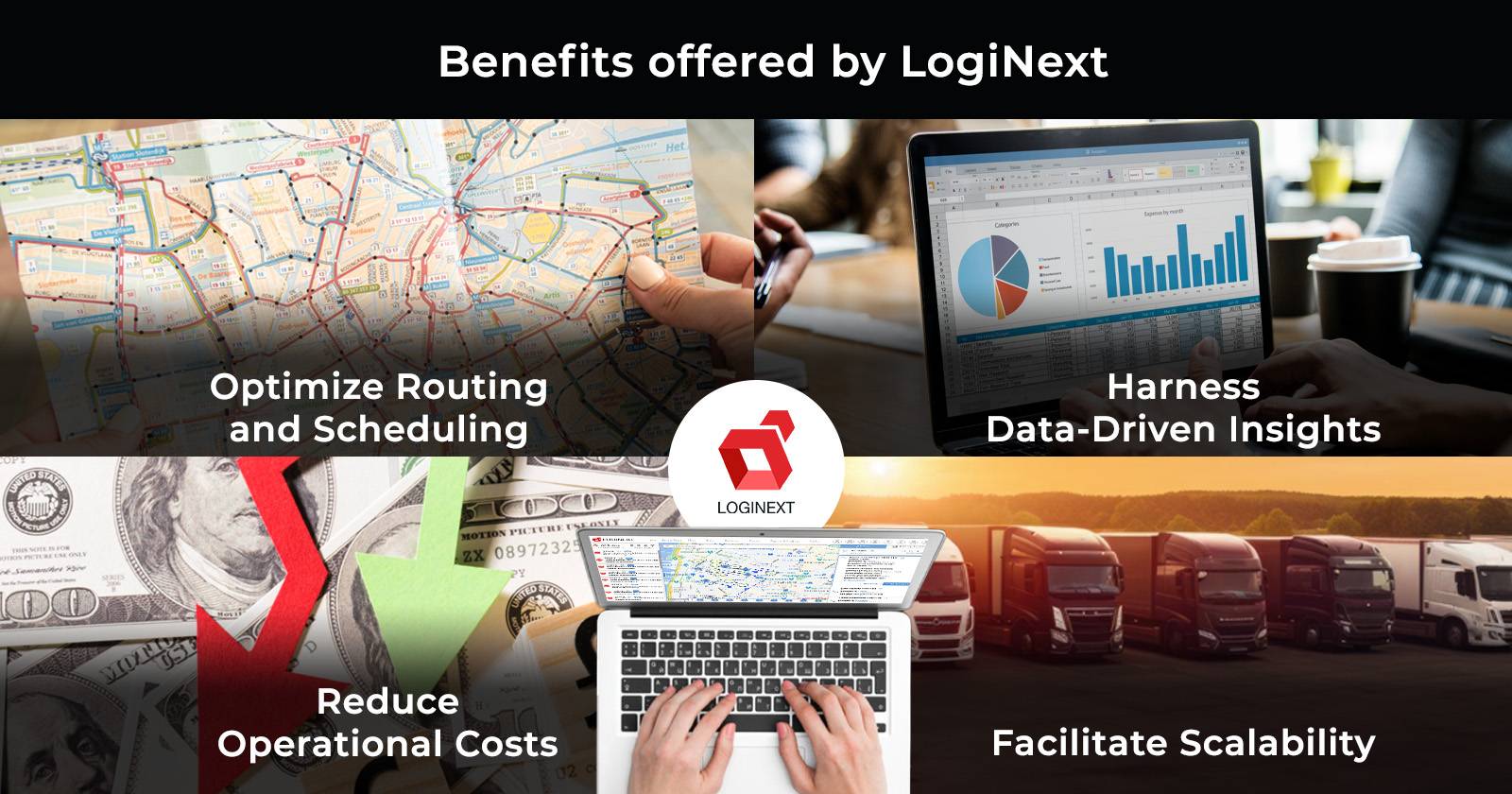
Optimize routing and scheduling:
LogiNext’s advanced algorithms ensure the most efficient delivery routes and schedules, minimizing costs and maximizing customer satisfaction. We analyze various factors such as traffic patterns, delivery windows, vehicle capacity, and real-time updates. This is done to ensure the most efficient delivery routes are planned.
These inputs help us minimize travel time, fuel consumption, and vehicle wear and tear, ultimately reducing operational costs. With real-time visibility into delivery operations, businesses can proactively address any issues that may arise, further bolstering customer trust.
Quick Read: Simplifying Dispatching and Scheduling Operations with LogiNext
Harness data-driven insights:
Our analytics platform offers actionable insights for informed decision-making, enabling businesses to improve operational efficiency and drive growth. Through detailed analysis of historical data and real-time metrics, businesses can identify areas for optimization, anticipate demand fluctuations, and streamline processes to enhance operational efficiency.
With logistics management software by your side, businesses can identify cost-saving opportunities, optimize delivery routes, and enhance customer experiences. This tool enables sustainable success in the dynamic world of logistics.
Download: Infographic on Benefits of Using a LMS
Reduce operational costs:
LogiNext’s optimization features are integral in driving down operational costs for businesses. By fine-tuning driver allocation, streamlining transportation routes, and optimizing warehouse processes, we significantly reduce expenses across the board. This reduction in costs translates to improved overall profitability. Thereby, allowing businesses to allocate resources more efficiently and invest in growth initiatives.
With us, businesses can achieve heightened cost-effectiveness while maintaining or even enhancing service quality. Thus, paving the way for sustainable success in a competitive market landscape.
Download: Discover Secrets to Reduce Operational Costs
Facilitate scalability:
LogiNext’s scalable logistics management software is tailored to seamlessly accommodate the evolving needs of businesses as they grow and expand. Whether it’s increasing order volumes, expanding into new markets, or diversifying product offerings, we ensure operations can scale efficiently without disruption. This scalability empowers businesses to capitalize on new opportunities, penetrate emerging markets, and stay ahead of competitors. Businesses can now navigate growth trajectories confidently, knowing their logistics infrastructure can flexibly adjust to meet changing demands and drive sustained success.
Don’t Miss: How to Handle Fluctuating Order Volumes?
Seamless third-party carrier integration:
LogiNext excels in seamlessly integrating third-party carriers into the logistics network, streamlining communication and collaboration processes. Through seamless integration, businesses can effortlessly coordinate with external carriers, ensuring reliable deliveries without disruptions. This approach developes a unified logistics ecosystem, where carriers work in sync with internal operations, optimizing efficiency and enhancing customer satisfaction.
With our seamless third-party carrier integration, businesses can deliver a consistent and reliable experience to customers while unlocking new levels of operational efficiency and competitiveness in the market.
Additional Info: Need for Multi-Carrier Shipping for Reliable Deliveries
Frequently Asked Questions
What is logistics management software?
Logistics management software is a digital solution that helps businesses plan, manage, and optimize logistics operations. It can support functions such as route planning, scheduling, carrier management, tracking, analytics, and operational automation.
What happens when businesses do not use logistics management software?
Businesses may face inefficient routing, higher operational costs, limited visibility, manual processes, scalability challenges, and difficulties managing third-party carriers. These issues can affect both profitability and customer experience.
Why is real-time data important in logistics management?
Real-time data helps businesses understand what is happening across their logistics operations as it happens. This allows teams to identify delays, monitor performance, respond to exceptions, and make faster operational decisions.
Take the plunge and join hands with LogiNext for the ultimate logistics management experience
Neglecting logistics management can have severe consequences for businesses, including financial losses, customer dissatisfaction, and damage to brand reputation. However, with LogiNext’s innovative logistics management software, businesses can overcome these challenges and unlock new opportunities for growth and success.
By optimizing routes, managing inventory efficiently, and leveraging data-driven insights, we empower businesses to deliver exceptional customer experiences while driving operational excellence. Don’t let inefficient logistics hold your business back—embrace LogiNext and take your logistics management to the next level.