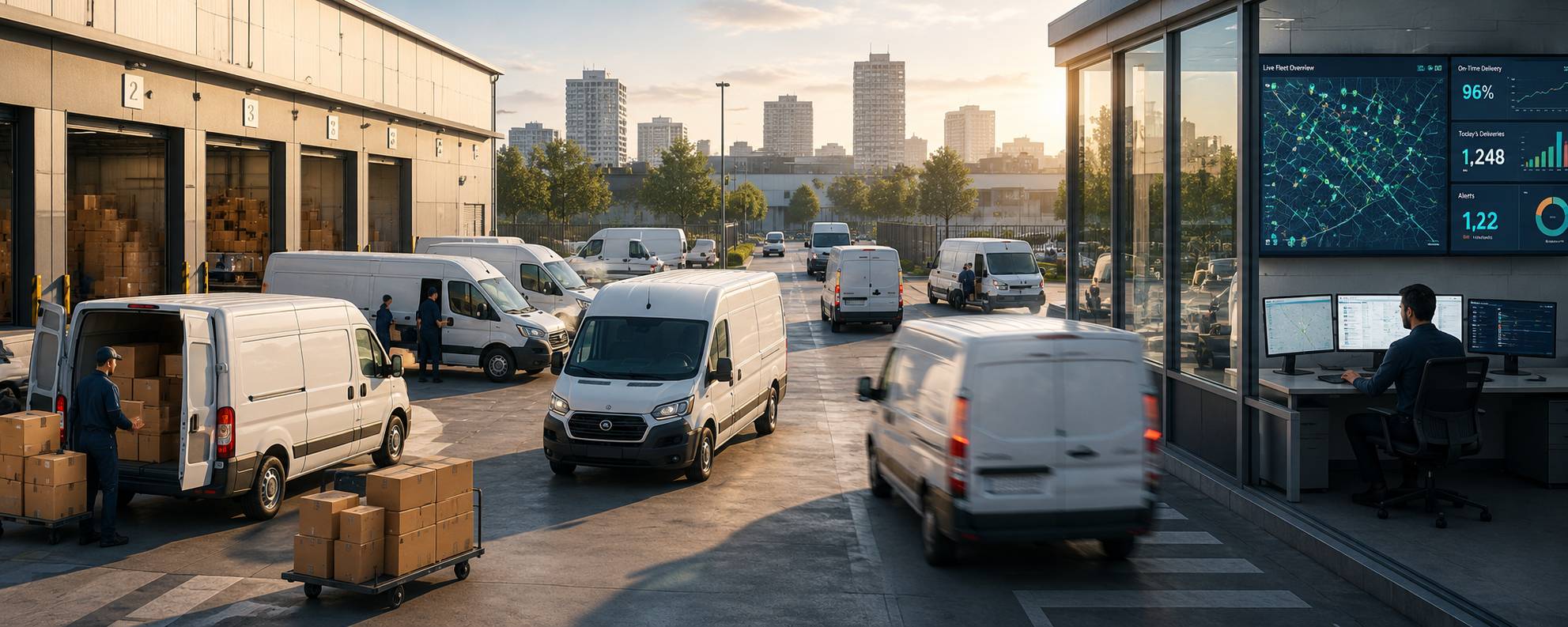
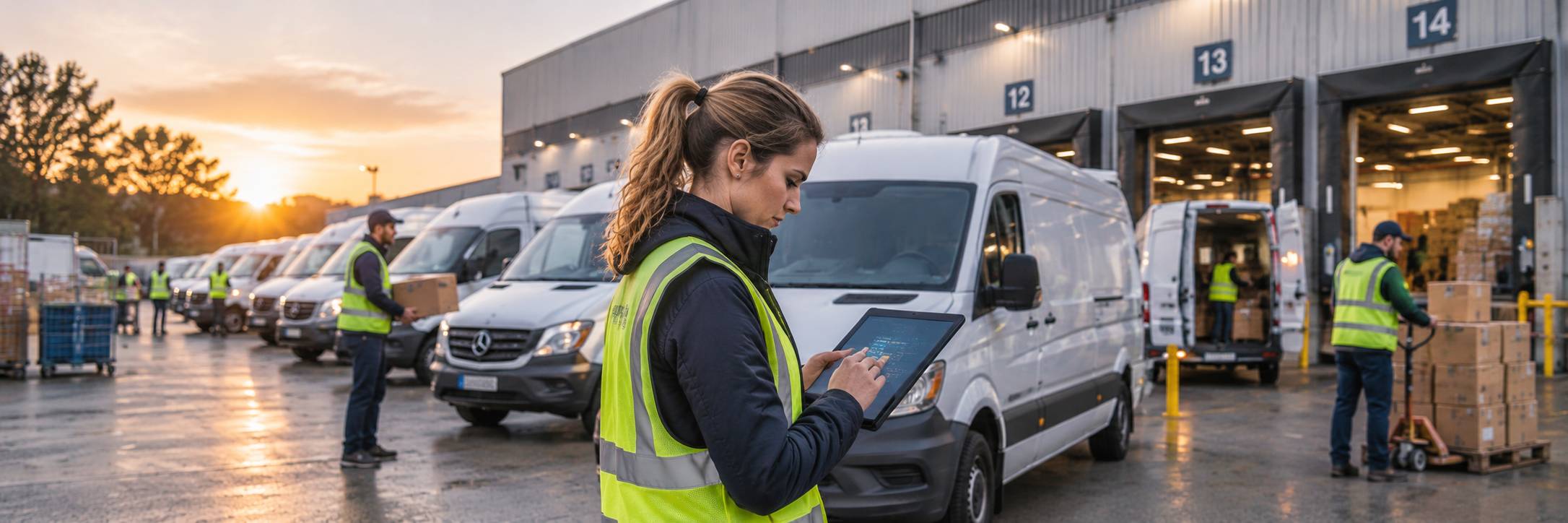
Fleet Optimization is about making the best possible use of available vehicles, drivers, and delivery capacity. But achieving it takes more than assigning orders and drawing routes on a map. Operations teams must consider vehicle costs, travel time, driver workloads, delivery commitments, and resource availability before dispatch.
It’s 8 AM. Hundreds of orders are waiting. Vehicles are lined up, drivers are ready, and the delivery clock is ticking. Yet, nobody can leave until the operations team solves one important puzzle: How should the entire fleet execute today’s deliveries?
How many vehicles should be deployed? Which orders should travel together? Can drivers complete another delivery round? And how can workloads remain manageable without compromising delivery timelines?
Every decision affects the next. That’s where intelligent fleet planning comes in.
Key Takeaways
- Fleet optimization involves making better decisions about vehicle deployment, delivery assignments, and trip planning.
- Manual dispatch planning becomes increasingly complicated as order volumes and operational constraints grow.
- Fleet Capacity Optimisation helps identify the minimum resources required to fulfil selected orders.
- Distance and Time Optimisation plans trips around travel distance, time, and variable resource costs.
- Balanced Allocation distributes workloads based on trip time, order count, weight, or volume.
- Sequence Orders optimises trips while respecting designated driver assignments and available capacity.
- Effective planning helps businesses make better use of existing fleet resources.
What Does Fleet Optimization Actually Involve?
Fleet optimization involves planning vehicle deployment, delivery assignments, and trip sequences to achieve operational objectives while respecting business constraints.
It isn’t always about using fewer vehicles. Sometimes, the priority is completing deliveries faster. In other situations, it’s distributing workloads fairly or ensuring specific drivers handle designated orders.
A comprehensive fleet planning strategy considers several interconnected factors:
- Resource availability: How many vehicles and delivery associates are available?
- Operating costs: What are the fixed and variable costs associated with each resource?
- Travel efficiency: How much time and distance will each trip require?
- Delivery capacity: Can vehicles accommodate the assigned orders?
- Workload distribution: Are delivery associates receiving manageable assignments?
- Operational constraints: Are fixed assignments, working hours, and delivery commitments being respected?
These factors influence one another. Changing one assignment can affect vehicle requirements, trip duration, and overall workload.
That’s why effective fleet optimization requires looking beyond individual orders and considering the entire operation.
Why Does Fleet Planning Become Difficult Without Intelligent Systems?
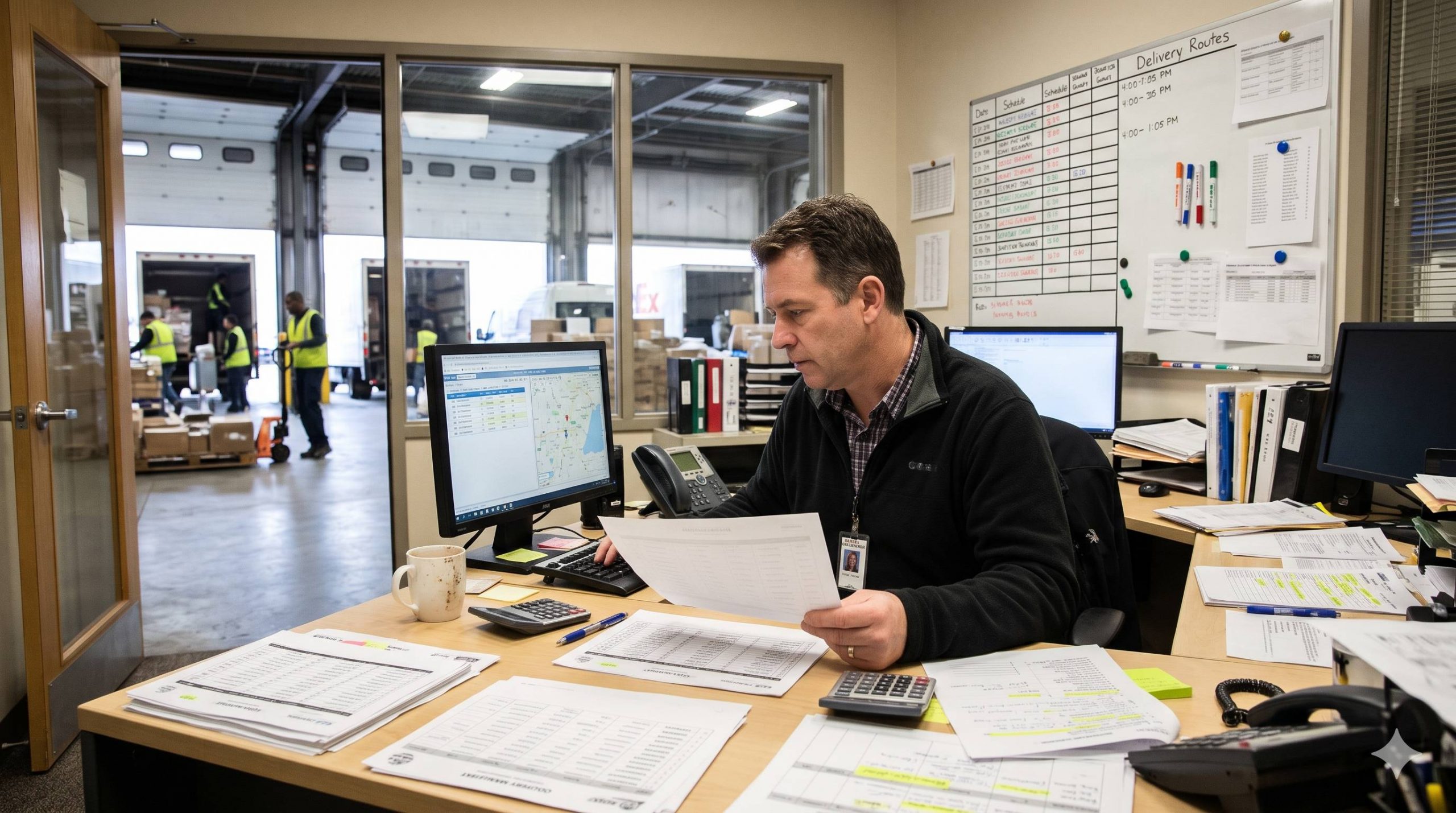
Without a structured planning system, dispatchers often rely on manual decisions and repeated adjustments.
Consider a distribution centre with 100 orders, 12 vehicles, and 12 delivery associates. The dispatcher needs to decide how many vehicles to deploy, which orders should travel together, and how assignments should be distributed.
Assigning orders equally might seem reasonable. However, ten orders within one neighbourhood require considerably less effort than ten orders scattered across a city.
Similarly, deploying every available vehicle might make assignments easier, but it could increase operating costs unnecessarily.
Traditional dispatch planning also becomes complicated when:
- Order volumes fluctuate throughout the day.
- Certain vehicles have higher operating costs than others.
- Drivers have fixed assignments or availability restrictions.
- Delivery workloads vary significantly despite similar order counts.
- Teams need to complete multiple delivery rounds within working hours.
The result? Dispatchers spend valuable time balancing competing priorities instead of focusing on operational execution.
The problem isn’t necessarily a shortage of resources. It’s knowing how to use them effectively.
How Does LogiNext Planning Intelligence Improve Fleet Optimization?
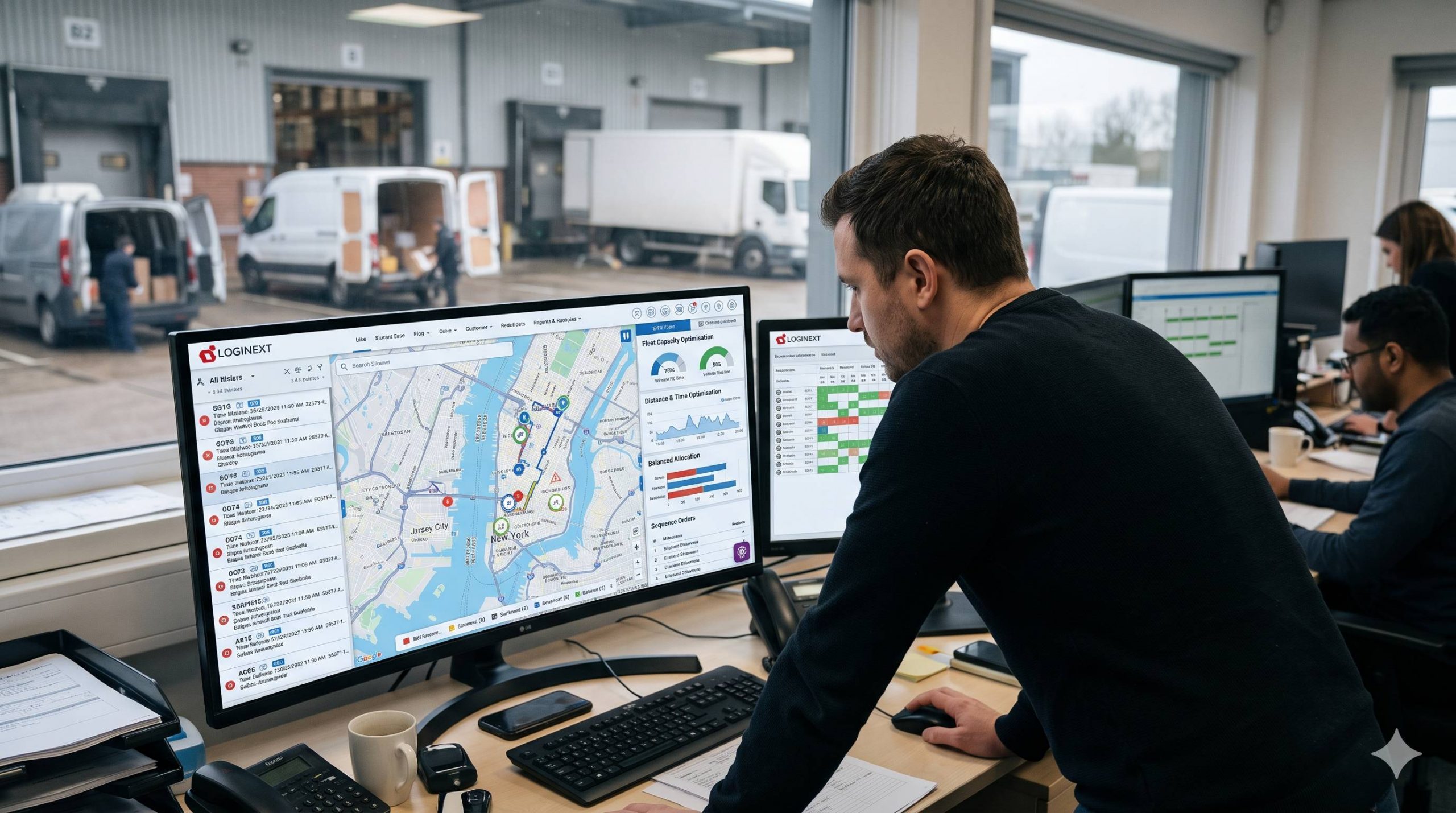
LogiNext Planning Intelligence helps operations teams approach fleet planning through four distinct optimization capabilities.
Each addresses a different operational priority, allowing businesses to configure their planning approach around what matters most.
1. Fleet Capacity Optimisation: Can You Deliver With Fewer Resources?
When reducing resource deployment costs is the priority, Fleet Capacity Optimisation helps determine the minimum resources required to fulfil selected orders.
LogiNext considers the fixed and variable costs configured for each vehicle or delivery associate. It attempts to fulfil selected orders using the minimum possible resources.
It can also estimate how many resources the operation requires. This helps businesses make more informed deployment decisions instead of automatically assigning every available vehicle.
2. Distance and Time Optimisation: Can Your Drivers Complete More Trips?
Sometimes, the fleet is already fixed. The challenge isn’t reducing the number of vehicles but making better use of their available working hours.
LogiNext’s Distance and Time Optimisation plans trips around travel distance and time while considering variable resource costs.
This helps operations teams create more efficient trips, allowing drivers to complete deliveries and potentially return for another round sooner.
For businesses handling high daily order volumes, making better use of existing fleet capacity can be an important operational advantage.
3. Balanced Allocation: Are Your Drivers Carrying Equal Workloads?
Equal order counts don’t necessarily translate into equal workloads.
One driver might receive ten orders within a compact neighbourhood. Another might receive ten orders spread across several distant locations.
Balanced Allocation helps distribute workloads based on the business’s preferred measurement:
- Trip time
- Order count
- Order weight
- Order volume
LogiNext evaluates feasible allocation options against the selected preference and applicable operational constraints. The result is a more considered distribution of delivery responsibilities, rather than simply dividing orders by count.
4. Sequence Orders: What If Driver Assignments Cannot Change?
Some delivery operations require specific associates to handle designated orders. In these situations, changing assignments isn’t an option.
However, the order in which deliveries happen can still make a difference.
LogiNext’s Sequence Orders capability optimises the trip sequence around the designated associate’s available time and capacity.
If the associate cannot accommodate all assigned orders, the remaining orders stay unassigned. They aren’t automatically transferred to another resource.
This allows businesses to optimise delivery sequences while respecting fixed assignment requirements.
How Should Businesses Choose the Right Fleet Planning Approach?
Not every delivery operation faces the same challenge. A business struggling with vehicle deployment has different priorities from one dealing with uneven driver workloads.
The starting point should always be the operational problem, not the technology. Here are four questions worth asking before planning the next dispatch:
1. Are we deploying more resources than necessary?
If vehicle and associate costs are eating into operational margins, start by evaluating resource requirements. Fleet Capacity Optimisation helps identify the minimum resources needed for selected orders.
2. Are our vehicles spending too much time completing trips?
If the fleet is already deployed, focus on travel distance and time. Distance and Time Optimisation helps plan trips around these considerations.
3. Are some drivers doing considerably more work than others?
Look beyond order counts. Evaluate trip time, weight, and volume to determine whether assignments reflect actual workloads. Balanced Allocation supports this approach.
4. Do certain orders have to stay with specific drivers?
When assignments cannot change, focus on the delivery sequence. Sequence Orders helps optimise trips around designated associates and their available capacity.
These questions turn fleet planning into a more structured decision-making process. Instead of making several disconnected adjustments, operations teams can identify the priority that matters most and plan accordingly.
What Does Smarter Fleet Planning Mean for Your Business?
A well-planned fleet operation starts making better decisions before vehicles even leave the depot.
Instead of treating vehicle deployment, trip planning, and workload distribution as separate exercises, businesses can approach them as interconnected planning decisions.
With LogiNext Planning Intelligence, teams can address these priorities through four capabilities:
- Fleet Capacity Optimisation helps minimise resource deployment.
- Distance and Time Optimisation helps improve trip efficiency.
- Balanced Allocation helps distribute delivery workloads.
- Sequence Orders helps optimise trips around fixed driver assignments.
A fleet optimization software solution should do more than generate assignments. It should help operations teams understand how different planning decisions affect the entire delivery operation.
Similarly, fleet planning software should account for the practical constraints that dispatchers face every day, rather than assuming every vehicle, driver, and order is interchangeable.
For businesses looking to improve delivery fleet optimization, the objective isn’t simply to move vehicles faster. It’s to make every available resource count.
Also Read: Fleet Tracking vs. Traditional Methods: A Comparison
Frequently Asked Questions
1. What is fleet optimization?
Fleet optimization is the process of improving how vehicles and delivery associates are deployed, assigned, and utilised to meet operational objectives while managing costs and delivery commitments.
2. How does fleet optimization software work?
Fleet optimization software evaluates orders, available resources, vehicle capacity, operating costs, travel distances, and delivery constraints to create efficient deployment and trip plans.
3. What is the difference between fleet optimization and route optimization?
Fleet optimization considers broader operational decisions, including resource deployment, workload distribution, and trip planning. Route optimization primarily focuses on determining efficient travel routes and delivery sequences.
4. How does fleet capacity optimization reduce operational costs?
Fleet capacity optimization evaluates available resources and their configured costs to determine how selected orders can be fulfilled using the minimum possible resources.
5. Why is workload balancing important in delivery operations?
Workload balancing prevents assignments from being distributed solely by order count. Considering trip time, weight, and volume helps create more practical delivery assignments.
Conclusion: Every Great Delivery Starts With a Great Plan
A successful delivery day doesn’t begin when the first vehicle leaves the depot. It begins much earlier, with decisions about resources, assignments, workloads, and trip sequences.
Getting these decisions right requires looking at the bigger picture. Using fewer vehicles, reducing travel time, balancing workloads, and respecting fixed assignments are different challenges, but they all contribute to better fleet planning.
LogiNext Planning Intelligence brings these four planning priorities together, helping businesses move beyond manual dispatch decisions and approach daily delivery operations with greater intelligence.
Ready to rethink how your fleet operates? Explore LogiNext’s intelligent logistics solutions and discover how smarter planning can transform your delivery operations.