




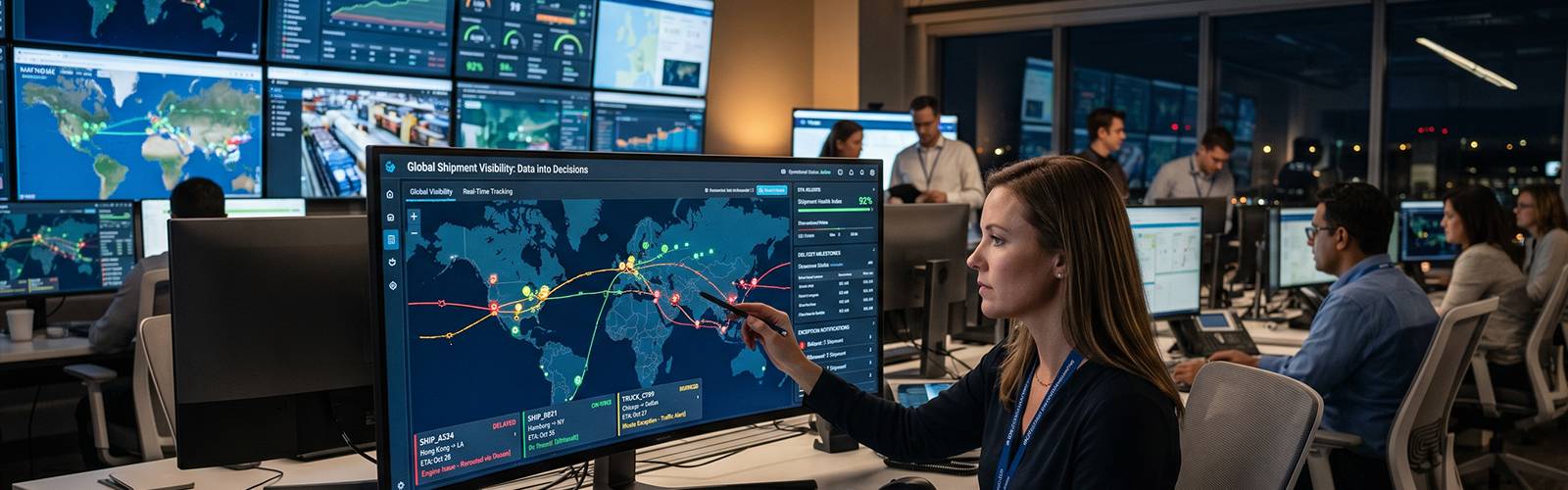
Shipment Visibility Platform: Turning Logistics Data into Decisions
In modern logistics, uncertainty is expensive. A delayed shipment is no longer just an operational hiccup. It creates a ripple effect that impacts customer trust, working capital, and service-level agreements. As supply chains grow more complex, businesses are shifting from reactive tracking to proactive control. At the center of this shift is the shipment visibility platform.
What was once a “nice-to-have” tracking layer has evolved into a strategic system of intelligence. It enables logistics teams to see, predict, and act in real time.
What is a Shipment Visibility Platform?
A shipment visibility platform enables businesses to track, monitor, and manage shipments across the entire supply chain, from origin to final delivery. It consolidates data from carriers, ports, warehouses, and transportation systems into a single interface.
In simple terms, it replaces fragmented communication such as emails, calls, and spreadsheets with a unified, real-time view.
A modern shipment visibility system goes beyond location tracking. It captures milestones such as departure, customs clearance, delays, and delivery confirmation. This allows logistics teams to operate with clarity instead of assumptions.
The Visibility Gap: Why Traditional Logistics Falls Short
Before digital platforms, shipment tracking relied heavily on manual updates and disconnected arrier systems. The result is limited control and delayed decision-making.
The lack of visibility creates tangible risks:
- Missed delivery windows
- Inefficient warehouse planning
- Poor customer communication
- Increased operational costs
Only 24% of businesses achieve true end-to-end visibility. Those that do are 2.5 times more likely to outperform competitors. The takeaway is clear. If you cannot see your shipments clearly, you cannot control your logistics effectively.
How a Shipment Visibility Platform Improves Logistics Control
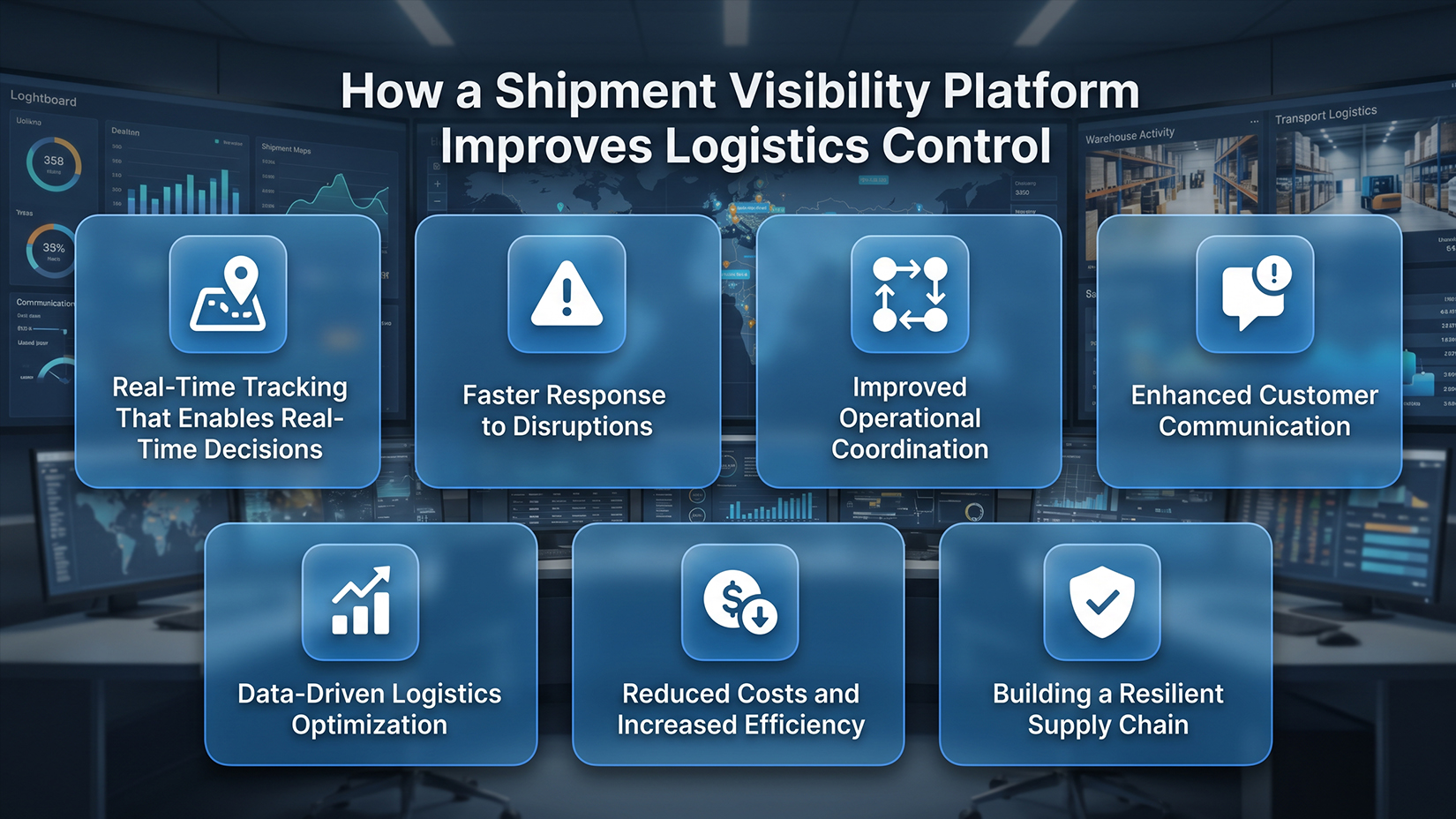
1. Real-Time Tracking That Enables Real-Time Decisions:
A robust shipment visibility software provides live updates on shipment location, ETA and status. This allows logistics managers to react immediately to disruptions.
Instead of discovering delays after they occur, teams can:
- Reroute shipments
- Adjust delivery schedules
- Inform stakeholders proactively
Real-time visibility transforms logistics from reactive firefighting into proactive management.
2. Faster Response to Disruptions:
Logistics disruptions are inevitable. Weather, port congestion, and carrier delays are common challenges. The difference lies in response time.
A shipment visibility solution detects anomalies early by tracking shipment milestones and timelines. This early warning system allows businesses to:
- Minimize delays
- Reduce penalties and detention costs
- Maintain service relability
Without visibility, disruptions are discovered late, when options are limited and costs are higher.
3. Improved Operational Coordination:
Logistics is a multi-stakeholder operation. Warehouses, carriers, customs teams, and customer service must stay aligned.
A centralized shipment visibility system ensures everyone works from the same data. This improves coordination across:
- Inventory planning
- Dock scheduling
- Customs clearance
- Last mile delivery
The result is smoother transitions between logistics stages and fewer bottlenecks.
4. Enhanced Customer Communication:
Customer expectations have changed. Visibility is no longer optional. It is expected.
- 93% of customers want continuous delivery updates.
- 47% will not return after poor visibility
A shipment visibility platform enables accurate, real-time communication. Businesses can provide:
- Live tracking links
- Proactive delay notifications
- Reliable delivery times
This transparency builds trust and strengthens brand loyalty.
5. Data-Driven Logistics Optimization:
Visibility is not just about tracking, its about learning. A shipment visibility software captures historical data enabling businesses to:
- Identify recurring delays
- Optimize routes and carriers
- Improve SLA performance
These insights turn logistics into a continuous improvement loop instead of a static process.
6. Reduced Costs and Increased Efficiency:
Lack of visibility leads to hidden costs such as idle inventory, expedited shipping, and failed deliveries. With a shipment visibility solution, businesses can:
- Reduced buffer inventory
- Improve asset utilization
- Lower administrative overhead
Studies show visibility-driven systems can cut incidental costs by up to 34 percent while improving operational efficiency significantly.
7. Building a Resilient Supply Chain:
Modern supply chains are volatile. Resilience depends on the ability to anticipate and adapt. A shipment visibility platform integrates predictive analytics, enabling:
- Accurate ETA predictions
- Risk assessment
- Scenario planning
This shifts logistics from reactive execution to strategic orchestration.
Key Features to Look for in a Shipment Visibility System
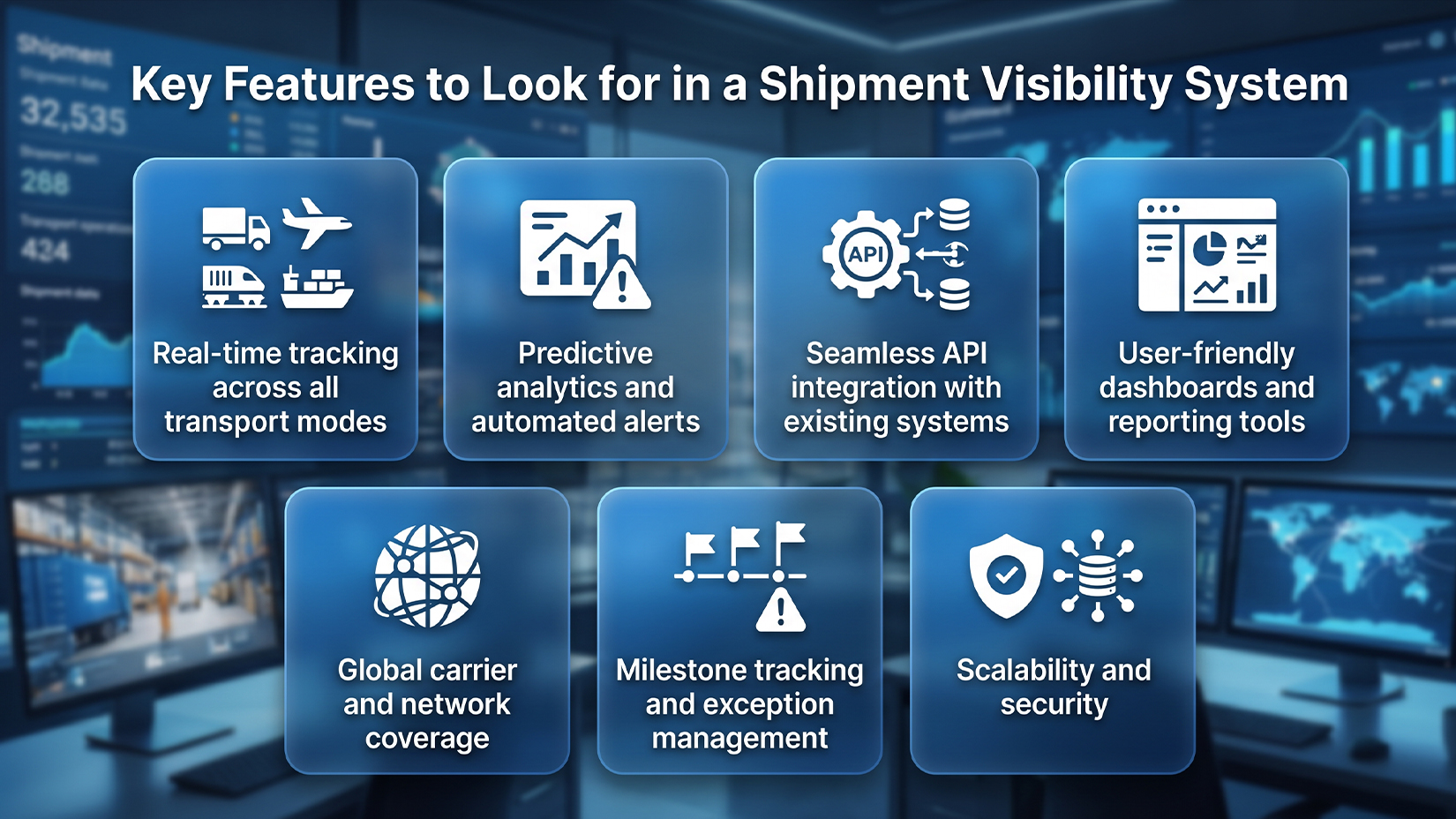
Not all visibility tools are equal. A high-performing shipment visibility system should include:
1. Real-Time Tracking Across All Transport Modes:
This includes road, rail, air, and sea. True visibility platforms aggregate data from multiple carriers and geographies to provide a consistent, real-time view of shipment movement.
2. Predictive Analytics and Automated Alerts:
Beyond tracking, the system should anticipate delays using historical and real-time data. Automated alerts for exceptions such as route deviations, delays, or missed milestones help teams act before issues escalate.
3. Seamless API Integration with Existing Systems:
A strong shipment visibility software must integrate easily with ERP, TMS, WMS, and carrier systems. This ensures uninterrupted data flow and eliminates silos across logistics operations.
4. User-Friendly Dashboards and Reporting Tools:
Complex data should be easy to interpret. Intuitive dashboards, customizable views, and real-time reporting enable faster decision-making across teams.
5. Global Carrier and Network Coverage:
A reliable shipment visibility solution should support a wide network of carriers and logistics partners. This is critical for businesses operating across multiple regions and supply chain nodes.
6. Milestone Tracking and Exception Management:
Tracking should go beyond location. The system must monitor key shipment milestones and flag exceptions instantly, enabling tighter operational control.
7. Scalability and Security:
As supply chains grow, the system should scale without performance issues. At the same time, it must ensure data security, compliance, and access control across stakeholders.
The goal is simple. One platform, complete visibility and zero guesswork.
The Strategic Shift: From Tracking to Control
The logistics industry is undergoing a mindset shift.
Old Model:
- Track shipments
- React to delays
- Manage exceptions manually
- Operate in silos teams and partners
New Model:
- Predict disruptions
- Act proactively
- Automate decision-making
- Enable cross-functional visibility and collaboration
A shipment visibility platform is no longer just an operational tool. It is a control tower for the entire supply chain.
This shift is driven by rising customer expectations and tighter delivery windows. Businesses can no longer afford delayed reactions. They need systems that provide foresight, not just hindsight.
With a modern shipment visibility system, logistics teams can move from firefighting to planning. They can simulate scenarios, optimize routes in real time, and make decisions based on data instead of assumptions.
The result is a more agile, resilient, and customer-centric supply chain.
Also Read: From Delivery Chaos to Smart Scale: AzamPay’s Story with LogiNext
Conclusion
In today’s logistics landscape, visibility equals control. Businesses that invest in a shipment visibility platform, shipment visibility software, and a robust shipment visibility solution gain more than tracking. They gain intelligence, move faster, respond smarter and deliver better.
If you are ready tso move from reactive tracking to proactive logistics control, solutions like LogiNext can help you achieve real-time visibility, predictive insights, and operational precision across your supply chain. Click on the red button to know more.
“” 69
 |  |  |




@LogiNext